 An official website of the United States government




Sleep apnea is a common condition in which your breathing stops and restarts many times during sleep. This can prevent your body from getting enough oxygen.
Overview
Sleep apnea is a condition that causes your breathing to stop and start again many times during sleep. There are two main types:
- Obstructive sleep apnea (OSA) is the most common type of sleep apnea. It happens when your upper airway becomes blocked many times during sleep. This blockage can reduce or completely stop airflow into your lungs.
- Central sleep apnea is a less common form of sleep apnea that occurs when your brain does not send the signals needed to breathe.
If sleep apnea is not diagnosed or treated, you may not get enough quality sleep. This can lead to problems with concentrating, making decisions, remembering things, or controlling your behavior. Untreated sleep apnea also raises the risk for stroke, heart attack, and other serious health problems.
Signs and Symptoms
You may not know you have sleep apnea until someone tells you about your symptoms. While asleep, you may experience:
- Breathing that starts and stops
- Frequent loud snoring (more common in men)
- Gasping for air
You may also notice these symptoms on your own:
- Daytime sleepiness and tiredness, which can lead to problems with learning, focusing, and reacting
- Dry mouth
- Fatigue (more common in women)
- Headaches (more common in women)
- Insomnia (more common in women)
- Sexual dysfunction or decreased libido
- Waking up often during the night to urinate
- Depression or anxiety (both more common in women)
Sleep apnea symptoms in women may be different than men. Because women may not have classic symptoms like snoring, they may not realize they have sleep apnea. It is important to talk to your healthcare provider if you have any of these symptoms.
Children
Symptoms in children can be different than in adults. During the day, you may notice that your child has:
- Behavioral problems, such as being overactive or aggressive
- Trouble paying attention at school
- Dry mouth or headaches in the morning
- Sleepiness
- Worsening asthma
During the night, you may notice that your child is:
- Snoring
- Mouth breathing
- Breathing in a way that starts and stops
- Waking up often
- Bedwetting
Related Health Effects
Untreated sleep apnea affects many parts of your body. It can cause low oxygen levels during sleep and prevent you from getting enough quality sleep. Also, it takes a lot of effort to restart breathing many times during sleep, and this can damage your organs and blood vessels. Untreated sleep apnea may raise your risk for the following conditions:
- Heart and blood vessel diseases, such as atrial fibrillation, atherosclerosis, difficult-to-control high blood pressure, heart attack, heart failure, and stroke
- Type 2 diabetes
- Chronic kidney disease
- Dementia in older adults
- Eye problems, such as glaucoma, dry eye, or keratoconus
- Metabolic syndrome
- Pregnancy complications
- Cancers, such as pancreatic, renal, and skin cancer
- Worsening asthma attacks
- Gastrointestinal reflux disease: This is when a muscle at the end of the esophagus does not close properly, allowing stomach contents to leak back and cause irritation. This can further disrupt sleep.
Sleep apnea can also raise your risk of complications during surgery and can affect your ability to drive safely.
Pregnant Women
In pregnant women, sleep apnea can also cause complications including:
- Caesarean delivery, also called a c-section
- Gestational diabetes
- Low birth weight
- Preterm birth
Children
In children, untreated sleep apnea can lead to problems with learning and memory. Daytime sleepiness and fatigue resulting from sleep apnea can also impact a child's behavior and their desire to be physically active.Children may also be at higher risk for:
- Impaired growth
- Poor academic performance
- Thinking and memory problems later in life
Causes and Risk Factors
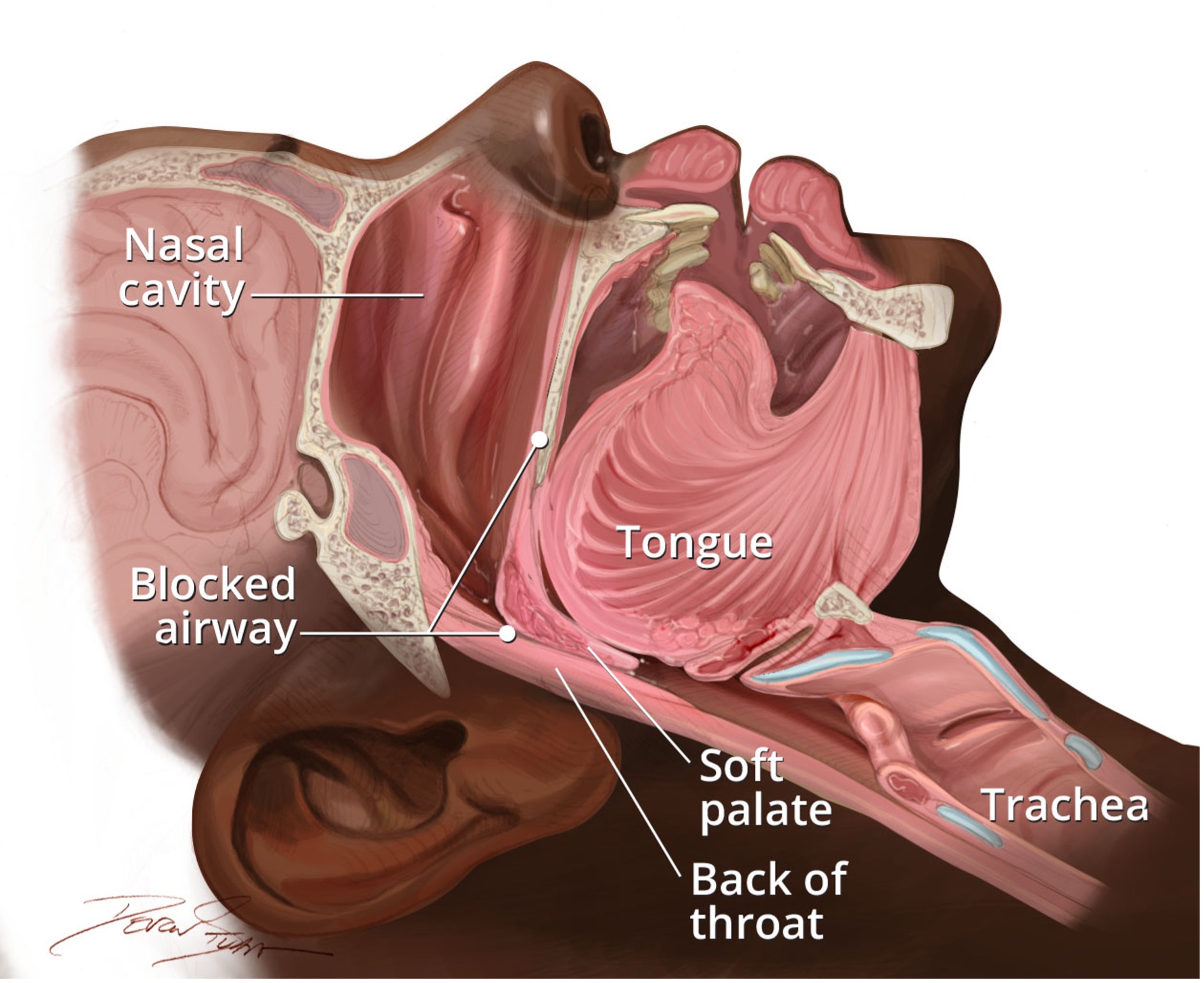
Obstructive sleep apnea is caused by conditions that block airflow through your upper airway during sleep. For example, your tongue may fall backward and block your airway.
Central sleep apnea, on the other hand, is caused by problems in how your brain controls your breathing while you sleep.
Risk Factors
Your age, family history, lifestyle habits, other medical conditions, and some features of your body (for example, your neck or tongue) can raise your risk for sleep apnea.
Obstructive and central sleep apnea have different risk factors as show below.
Obstructive Sleep Apnea
Many conditions can cause obstructive sleep apnea. Some factors, such as unhealthy lifestyle habits, can be changed. Other factors, such as age and family history, cannot be changed.
- Age: Sleep apnea can occur at any age, but your risk increases as you get older. As you age, fatty tissue can build up in your neck and tongue.
- Obesity: People with obesity can have increased fat deposits in their neck that can block their upper airway. Maintaining a healthy weight can help prevent or treat sleep apnea caused by obesity.
- Large tonsils, neck, or tongue: These features can narrow your upper airway or make it more likely for your tongue to block your airway while you sleep.
- Endocrine disorders or changes in your hormone levels: Your hormone levels can affect the size and shape of your face, tongue, and upper airway. People who have polycystic ovary syndrome (PCOS), low levels of thyroid hormones, or high levels of insulin or growth hormone have a higher risk for sleep apnea.
- Family history and genetics: Sleep apnea can be inherited. Your genes help determine the size and shape of your skull, face, and upper airway. Your genes can also raise your risk for other health conditions, such as cleft lip and cleft palate and Down syndrome, which can lead to sleep apnea.
- Heart or kidney failure: These conditions can cause fluid to build up in your neck, which can block your upper airway.
- Lifestyle habits: Drinking alcohol and smoking can raise your risk for sleep apnea. Alcohol can make the muscles of your mouth and throat relax, which may close your upper airway. Smoking can cause inflammation in your upper airway, which affects breathing.
- Sex: Sleep apnea is more common in men than women. Men are more likely to have serious sleep apnea and to be diagnosed with sleep apnea at a younger age than women.
Central Sleep Apnea?
The following factors can raise your risk for central sleep apnea.
- Health conditions: Some conditions that affect how your brain controls your airways and chest muscles can raise your risk. These include heart failure, stroke, amyotrophic lateral sclerosis, and myasthenia gravis. Your hormone levels can also affect how your brain controls your breathing.
- Opioid use: Opioid use disorder or long-term use of prescribed opioid-based pain medicines can cause problems with how your brain controls sleep.
- Family history and genetics: Your genes can affect how your brain controls your breathing during sleep. Genetic conditions, such as congenital central hypoventilation syndrome, can raise your risk.
- Lifestyle habits: Drinking alcohol and smoking can affect how your brain controls sleep, or the muscles involved in breathing.
- Premature birth: Babies born before 37 weeks of pregnancy have a higher risk for breathing problems during sleep. In most cases, the risk decreases as the baby gets older.
- Sex: Central sleep apnea is more common in men than women.
- Age: As you get older, normal changes in how your brain controls breathing during sleep may raise your risk for sleep apnea.
Prevention Guidance
You may be able to prevent obstructive sleep apnea by making healthy lifestyle changes. These changes include:
- Following a heart-healthy diet
- Aiming for a healthy weight
- Quitting smoking
- Limiting alcohol intake
You can also take steps to improve your sleep habits. First, make sure that you give yourself enough time to sleep. With enough sleep each night, you may find that you’re happier and more productive during the day.
Other tips to improve your sleep habits include:
- Going to sleep and waking up around the same time each day, even on weekends
- Making your bedroom cool, quiet, and dark
- Avoiding caffeine, nicotine, and alcohol close to bedtime
- Getting regular physical activity during the daytime, at least 5-6 hours before going to bed
- Avoiding naps, especially in the afternoon
- Eating meals on a regular schedule and avoiding late-night dinners
- Limiting fluids close to bedtime
Diagnosis
Your healthcare provider will ask about your symptoms and risk factors for sleep apnea. They may also ask if you have a family history of sleep apnea.
There are several tools to help diagnose sleep apnea:
- Sleep study: Your provider may ask you to see a sleep specialist or go to a center for a sleep study. A sleep study is a painless test that measures your breathing, heart rate, and brain activity while you sleep. It may be done at home, in a hospital, or in a sleep study clinic. Sleep studies help diagnose which type of sleep apnea you have and how serious it is.
- Sleep diary: A sleep diary can help you track how long and how well you sleep, as well as how sleepy you feel during the day. These details can help your provider diagnose your condition.
- Additional tests: Your provider may order blood tests to check for other medical conditions that can cause sleep apnea, such as thyroid hormone levels or polycystic ovary syndrome. Your provider will ask if you use medicines, such as opioids, that could affect your sleep.
For children, a healthcare provider will look in their nose and mouth for large tonsils or other structures that could block the airway. The provider may also measure your child’s blood oxygen levels overnight using pulse oximetry.
Treatment and Management
Breathing devices and lifestyle changes are common sleep apnea treatments that can be very effective.. If these do not work, your provider may recommend surgery.
Healthy Lifestyle Changes
To help treat sleep apnea, healthy lifestyle changes can be very effective. These include
- Getting regular physical activity
- Maintaining healthy sleeping habits and a healthy weight
- Limiting alcohol and caffeine intake
- Quitting smoking
Your provider may also recommend that you sleep on your side — not on your back — as this can help keep your airway open while you sleep.
Breathing Devices
A positive airway pressure (PAP) machine is the most common treatment for sleep apnea. PAP machines often work best when they are paired with healthy lifestyle changes.
Side effects of PAP treatment may include congestion, runny nose, dry mouth, or nosebleeds. Some masks can cause irritation and a healthcare provider can help you find ways to relieve these symptoms and adjust to using your CPAP machine. If you experience stomach discomfort or bloating, stop using your CPAP machine and call your healthcare provider right away.
There are different types of PAP machines. Talk to your provider about which type is most appropriate for you:
Continuous positive airway pressure (CPAP) machines use mild air pressure to keep the airway between your nose and throat open while you sleep. A CPAP machine includes:
- A mask or other device that fits over your nose or your nose and mouth
- Straps to position the mask
- A tube that connects the mask to the machine’s motor
- A motor that blows air into the tube
You should use your CPAP machine every time you sleep, including when traveling and during naps. Getting used to your CPAP machine can take time. Your healthcare provider will work with you to find the most comfortable mask and, if needed, assistance with different humidity and pressure settings.
You may notice immediate improvements after starting CPAP treatment, such as better sleep quality, less snoring, and less daytime sleepiness. Long-term benefits include helping to prevent or control high blood pressure, lowering your risk for stroke, and improving memory and other cognitive function.
Bilevel positive airway pressure (BiPAP) machines are like CPAP machines, but they deliver different pressure based on whether you are inhaling or exhaling.
Automatic Positive Airway Pressure (APAP) automatically adjusts the air pressure a person receives during sleep.
Oral Devices
Oral devices are worn in your mouth while you sleep. They hold your jaw or tongue in a position that helps keep your airway open. Your doctor may prescribe an oral device if you have mild sleep apnea or if you do not want to use CPAP or cannot tolerate it. There are two main types:
- Mandibular advancement devices cover the upper and lower teeth and hold the jaw in a position that prevents it from sliding backwards and blocking the upper airway.
- Tongue retaining devices are mouthpieces that hold the tongue in a forward position to prevent it from blocking the upper airway.
There is also another type of oral device that is used while you are awake. Removable tongue muscle stimulators are mouthpieces that stimulate and tone the tongue. These are typically used once a day while you are awake. They can help prevent your tongue from falling backward and blocking the airway during sleep.
Orofacial Therapy
Exercises for your mouth and facial muscles, called orofacial therapy, may help treat sleep apnea in children and adults. This therapy helps to strengthen and reposition the tongue and muscles that control your lips, tongue, upper airway, and face.
Surgery
If a CPAP or other oral devices do not reduce your sleep apnea, you may need surgery. Surgical options include:
- Adenotonsillectomy: Removes the tonsils and adenoids
- Soft tissue removal: Removes some soft tissue from your mouth and throat to make your upper airway bigger
- Jaw advancement surgery: Moves your upper and lower jaw forward to make your upper airway bigger
- Implant surgery for hypoglossal nerve stimulation (HGNS): HGNS is a sleep apnea treatment that stimulates the nerve under your tongue and keeps your airways open. A device is implanted under the skin of your chest and connects to the nerve in your mouth.
Treatment for Children
Depending on the cause of your child’s sleep apnea, their provider may recommend:
- Weight loss interventions, including diet and exercise
- Surgery to remove their tonsils and adenoids (adenotonsillectomy)
- A PAP machine, such as a CPAP
- Nasal spray steroids, such as budesonide
- Montelukast, an asthma medicine, can cause behavior and mood side effects: Contact your child’s provider immediately if you notice any changes.
- Oral devices or orthodontic treatment
- Orofacial therapy
Treatment During Pregnancy
Breathing devices such as a CPAP machine are safe to use during pregnancy. Because pregnancy causes changes in your body, you may need to see a sleep specialist to adjust the settings of your CPAP machine during and after your pregnancy.
Living With Sleep Apnea
If you have been diagnosed with sleep apnea, you will need to schedule regular checkups to make sure your treatment is working. You may need to repeat your sleep study during this period, especially if you gain or lose a lot of weight.
Using Your PAP Machine
It is important to use your PAP machine for all sleep, including naps. If you are traveling, bring your breathing device with you. It may take time to adjust to breathing with the help of a PAP machine.
Tips for using your PAP machine:
- Adjust the mask every night while lying down with the machine on to make sure it fits properly.
- Wear your mask for part of the day, such as while watching TV, to get used to how it feels.
- Clean your mask and wash your face before putting on the mask to help make a better seal.
- Learn how to set up and properly clean all parts of your machine. Refill prescriptions on time for all parts that need regular replacement, including tubes, masks, and air filters.
Talk to your healthcare provider if you feel claustrophobic, are bothered by noise, have a mask that does not fit well, have difficulty sleeping, or have dry mouth or a stuffy nose. Your provider can suggest a different type of mask or adjust the settings of your machine.
For the treatment to keep working, clean your mask and tube every day and refill your medical device prescription at the right time.
Using Your Oral Device
If you use an oral device, you may need to see your dentist after six months and then every year. Your dentist will check whether the device is working correctly and whether it needs to be adjusted or replaced. It is common to feel some discomfort after a device is adjusted until your mouth and facial muscles get used to the new fit.
Safety tips:
- If you need surgery, tell your healthcare provider that you have sleep apnea. Your provider may need to take extra steps to keep your airway open during surgery.
- Untreated sleep apnea can make you sleepy during the day and make it difficult for you to pay attention and make decisions while you drive. This can cause road accidents. Pay attention to your symptoms and do not drive if you feel tired or sleepy.
Tips for Children
If your child has sleep apnea, keep them away from secondhand smoke, which can worsen their condition. If your child has overweight or obesity, help them adopt healthy lifestyle changes to reach a healthy weight. Work with your child’s healthcare provider to develop a plan.
Find Clinical Trials
Clinical trials uncover better ways to prevent, diagnose, treat, and understand diseases and conditions. To ensure results apply to everyone, volunteers of all ages, sexes, and backgrounds, including both healthy individuals and those with specific medical conditions, are needed. Find clinical trials on sleep apnea.
Research Information
The National Institutes of Health (NIH) is the largest public funder of biomedical research in the world. NIH invests most of its budget in medical research seeking to enhance life and to reduce illness and disability. NIH-funded research has led to breakthroughs and new treatments helping people live longer, healthier lives, and building the research foundation that drives discovery.
NIH funds research on the causes, prevention, diagnosis, and treatment of sleep apnea. Current research aims to develop new and improved treatments for sleep apnea to prevent these complications.
Find NIH-funded research projects using NIH RePORTER, a searchable database of current and past research projects supported by NIH and other federal agencies.