 An official website of the United States government




Consuming alcohol can affect every organ and system in the body. The more alcohol is consumed, the higher the risk to your health.
Emergency Information
If you or someone you know is struggling or having thoughts of suicide, call or text the 988 Suicide & Crisis Lifeline at 988 or chat at 988lifeline.org. In life-threatening situations, call 911.
Alcohol Overdose
An alcohol overdose occurs when there is so much alcohol in the bloodstream that areas of the brain that control basic life-support functions—such as breathing, heart rate, and temperature control—begin to shut down. Alcohol overdose can lead to permanent brain damage or death.
Symptoms of alcohol overdose include:
- Mental confusion or stupor
- Difficulty remaining conscious, or inability to wake up
- Vomiting
- Seizures
- Slow breathing (fewer than 8 breaths per minute)
- Irregular breathing (10 seconds or more between breaths)
- Slow heart rate
- Clammy skin
- Dulled responses, such as no gag reflex
- Extremely low body temperature, bluish skin color, or paleness
If you suspect someone has an alcohol overdose, call 911 immediately. Do not wait for all symptoms to appear. Be aware that a person who has passed out can die.
Blood Alcohol Content (BAC) can continue to rise even after a person stops drinking or loses consciousness, because alcohol in the stomach and intestine continues to enter the bloodstream. It is dangerous to assume an unconscious person will be fine by sleeping it off.
Alcohol Withdrawal
Alcohol withdrawal can be fatal for someone with a history of heavy drinking if not medically managed.
Overview
Alcohol is one of the most widely used substances in the United States, with most people reporting that they drank alcohol at some point in their lives. Alcohol’s effects on health are far-reaching. It is a major contributor to accidents and injuries and can contribute to chronic health conditions in every organ system in the body, including alcohol use disorder.
Understanding how alcohol affects the body and how different levels of drinking can increase risk of harm can help you make informed decisions about your health.
What Is a Standard Drink?
In the United States, one standard drink contains about 14 grams, or 0.6 fluid ounces, of pure alcohol.
Each of the following counts as one U.S. standard drink:
- 12 fl. oz of regular beer (about 5% alcohol)
- 8–10 fl. oz of malt liquor or flavored malt beverages such as hard seltzer (about 7% alcohol)
- 5 fl. oz of table wine (about 12% alcohol)
- 3–4 fl. oz of fortified wine such as sherry or port (about 17% alcohol)
- 1.5 fl. oz of distilled spirits such as gin, rum, tequila, vodka, or whiskey (about 40% alcohol)
The size of a drink alone does not tell you how much alcohol it contains. For example, many light beers have less alcohol than regular beer, and some craft beers contain more alcohol. For example, a 12 oz craft beer at 10% alcohol contains two full standard drinks.
How Much Is Too Much?
Drinking any amount of alcohol can carry certain immediate risks, including risk of falls, burns, drownings, and car crashes. It can also cause longer-term health consequences such as certain cancers, liver disease, high blood pressure and cardiac arrythmias. These risks increase with the amount and frequency of alcohol consumed.
Who Should Avoid Alcohol Completely?
Some people should avoid alcohol entirely. These include people who:
- Plan to drive or operate machinery, or participate in activities requiring skill, coordination, and alertness
- Take over the counter or prescription medicines that interact with alcohol
- Have certain medical conditions
- Are recovering from alcohol use disorder (AUD) or are unable to control how much they drink
- Younger than 21
- Are pregnant or may become pregnant
Drinking Patterns
Health experts use specific terms to describe different patterns of alcohol use.
Alcohol Misuse
Alcohol misuse refers to drinking in a manner, situation, amount, or frequency that could cause harm to the person who drinks or to those around them. It includes binge drinking and heavy alcohol use. Over time, alcohol misuse increases the risk of alcohol use disorder, accidents, injuries, and chronic health problems.
Binge Drinking
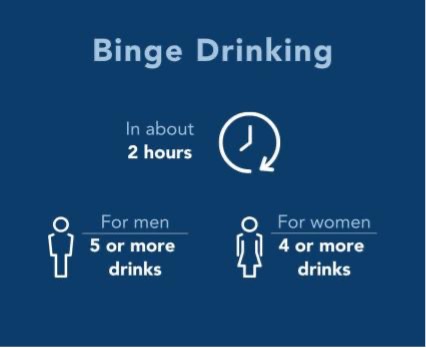
The National Institute on Alcohol Abuse and Alcoholism (NIAAA) defines binge drinking as a pattern of drinking that brings blood alcohol concentration (BAC) to 0.08% or higher. For a typical adult, this means consuming the following in about 2 hours:
- Five or more drinks for men.
- Four or more drinks for women.
Binge drinking increases the risk of harm, such as alcohol-related blackouts (gaps in memory) and alcohol overdoses, accidents, and injuries.
Heavy Drinking
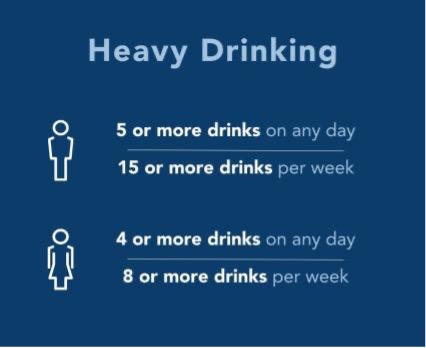
NIAAA defines heavy drinking as:
- Five or more drinks on any day, or 15 or more drinks per week for men
- Four or more drinks on any day, or eight or more drinks per week for women
Alcohol Use Disorder (AUD)
AUD is a medical condition characterized by an impaired ability to stop or control alcohol use despite adverse social, occupational, or health consequences. It encompasses the conditions that some people refer to as alcohol abuse, alcohol dependence, alcohol addiction, and the colloquial term, alcoholism. Considered a brain disorder, AUD can be mild, moderate, or severe. Lasting changes in the brain caused by alcohol misuse cause AUD and make people vulnerable to a return to drinking during recovery.
Related Health Effects
The toll of excessive alcohol use is significant:
- Drinking excessively on occasion can lead to harmful effects, including an increased risk of drowning, hypothermia, aspiration, and overdoses due to alcohol and other substances. Alcohol also increases the risk for injuries and deaths from violence, falls, fires, and motor vehicle crashes, boating accidents, occupational and machine accidents.
- Many suicide decedents have blood alcohol concentrations of 0.1% or more.
- Many alcohol-related deaths are due to alcohol-attributable chronic health conditions.
How Alcohol Affects the Brain and Body
Alcohol affects virtually every organ and system in the body.
Brain and Nervous System
Alcohol interferes with the brain’s communication pathways and can affect the way the brain looks and works. It makes it harder for the brain areas that control balance, memory, speech, and judgment to do their jobs, resulting in a higher likelihood of injuries and other negative outcomes.
Long-term heavy drinking causes changes in neurons, such as reductions in their size. Alcohol misuse is also linked to peripheral neuropathy—a condition that can cause numbness in the arms and legs and painful burning in the feet.
Alcohol-Induced Blackouts
Alcohol-induced blackouts are gaps in a person’s memory for events that occurred while intoxicated. These gaps happen when a person drinks enough alcohol to temporarily block the transfer of memories from short-term to long-term storage - a process called memory consolidation - in a brain area called the hippocampus. There are two types of blackouts:
- Fragmentary blackouts: Spotty memories with “islands” of memory separated by missing periods of time.
- En bloc blackouts: Complete amnesia, often spanning hours, where memories typically cannot be recovered.
Blackouts are more likely to occur when someone drinks on an empty stomach, drinks quickly, or engages in binge drinking. Research among college students has shown that the frequency of blackouts predicts other alcohol-related consequences, such as missing work or school, being injured, or ending up in the emergency room.
Hangovers
A hangover refers to a set of symptoms that occur because of drinking too much. A hangover can vary from person to person. Typical symptoms include:
- Mild dehydration, causing thirst, fatigue, and headache
- Disrupted sleep
- Nausea and stomach discomfort
- Vertigo
- Sensitivity to light and sound
- Anxiety and irritability
- Sweating
- Increased blood pressure.
- And while you won’t notice it—Inflammation of the liver and build-up of toxic by-products of alcohol in the body
Hangover symptoms peak when the blood alcohol concentration in the body returns to about zero. The symptoms can last 24 hours or longer. There is no magic potion for beating hangovers—and only time can help. Time is needed for the body to clear the toxic byproducts of alcohol, rehydrate, heal irritated tissue, and restore immune and brain activity to normal.
Hangovers can be both painful and dangerous. During a hangover, a person’s attention, decision-making, and muscle coordination can all be impaired. Also, the ability to perform important tasks, such as driving, operating machinery, or caring for others can be negatively affected.
Wernicke-Korsakoff (WK) Syndrome
Wernicke-Korsakoff (WK) syndrome is a serious brain condition that may occur as a consequence of chronic alcohol misuse and severe alcohol use disorder. WK syndrome involves two different brain disorders that often occur together: Wernicke’s disease and Korsakoff’s psychosis. They result from brain damage associated with AUD, combined with vitamin B1 (thiamine) deficiency. In people with severe AUD, poor nutrition decreases the ability of the gut to absorb thiamine from food and, therefore, increases the chance of developing WK syndrome. Without timely treatment with supplemental thiamine, WK syndrome can be disabling. It can produce permanent memory loss and may unconsciously create false, distorted, or fabricated memories to fill in memory gaps. Patients with Korsakoff's syndrome also have executive function deficits with difficulty in initiation, planning, and regulation of behavior.
Liver
Heavy drinking takes a serious toll on the liver. Alcohol-related liver conditions include steatosis, which is the accumulation of fat in the liver, steatohepatitis, which is fatty liver plus inflammation, fibrosis resulting from damage and death of liver cells, cirrhosis that reflects replacement of healthy tissue with scar tissue, and liver cancer known as hepatocellular carcinoma. Alcohol-associated hepatitis is a clinically defined condition in which liver inflammation is severe enough to cause jaundice, and in some cases acute liver failure.
Alcohol and Cancer
There is strong scientific evidence that drinking alcohol can cause cancer. The International Agency for Research on Cancer classified alcohol as a Group 1 carcinogen in 1987. The National Toxicology Program has listed consumption of alcoholic beverages as a known human carcinogen since 2000.
Alcohol consumption is a leading preventable cause of cancer in the United States.
Drinking alcohol is associated with increased risks of the following cancers:
- Oral cavity and throat
- Voice box
- Esophagus (squamous cell carcinoma)
- Liver
- Breast
- Colorectal
Even light drinkers can be at increased risk for some cancers. For example, women who have just one drink per day have a higher risk of breast cancer than those who have less than one drink a week.
Research also shows that people who use both alcohol and tobacco have much greater risks of developing cancers of the mouth, throat, voice box, and esophagus than people who use either substance alone. For oral and pharyngeal cancers, the harms of using both alcohol and tobacco are multiplicative—greater than the sum of the individual harms.
Stopping alcohol consumption is associated with lower risks of oral cavity and esophageal cancers, and possibly throat, breast, and colorectal cancers. It may take years for cancer risks to return to those of people who never drank, but it is never too late to stop drinking and reduce the risks.
How Alcohol May Cause Cancer
Researchers have identified several ways alcohol may increase cancer risk:
- Breaking down ethanol into acetaldehyde, a toxic chemical and probable human carcinogen that can damage DNA and proteins
- Generating reactive oxygen molecules that can damage DNA, proteins, and fats in the body
- Impairing the body’s ability to absorb nutrients associated with decreased cancer risk, including vitamins A, C, D, E, and folate
- Making it easier for the mouth and throat to absorb harmful chemicals, such as those from cigarette smoke
- Increasing blood levels of estrogen, which at high levels can cause breast cancer
Heart and Circulatory System
Long-term heavy drinking weakens the heart muscle, causing cardiomyopathy. Alcohol misuse can also lead to high blood pressure, irregular heartbeat (arrhythmia), or increased heart rate. Chronic, heavy drinking raises the risk for ischemic heart disease (heart problems caused by narrowed arteries) and heart attacks. Even low drinking levels may confer risk. Heavy alcohol use can cause problems in the blood, including anemia (low red blood cell levels), leukopenia (low white blood cell levels), thrombocytopenia (low platelet levels), and macrocytosis (enlarged red blood cells).
Digestive System
Drinking alcohol can contribute to a “leaky gut,” allowing toxins to enter the body and changing the composition of microorganisms in the gastrointestinal tract. Alcohol can damage the lining of the GI tract, promote inflammation, and cause GI bleeding. It is also associated with an increased risk of gastroesophageal reflux disease (GERD).
Immune System
Drinking too much alcohol weakens the immune system, making the body more vulnerable to disease. Even a single occasion of heavy drinking slows the body’s ability to fight infections for up to 24 hours afterward.
Heavy use of alcohol can interfere with the immune response. This can harm the body’s defense against infection, recovery from tissue injury. It can also cause systemic inflammation throughout the body and contribute to alcohol-related organ damage.
Lungs
Alcohol misuse is associated with an increased risk of acute respiratory distress syndrome (ARDS), bacterial pneumonia, and respiratory syncytial virus (RSV) infection. People who drink often are more likely to get diseases like pneumonia and tuberculosis than people who do not drink too much.
Muscles and Bones
Drinking increases the risk of muscle wasting. Heavy alcohol use raises the risk for broken bones. Even low levels of alcohol intake increase the odds for recurrent gout attacks. Alcohol also impairs bone fracture repair and reduces bone density.
Pancreas
Alcohol misuse over time can lead to pancreatitis—a dangerous inflammation of the pancreas that causes swelling and pain. Acute pancreatitis can turn into chronic pancreatitis, which is a risk factor for pancreatic cancer and diabetes.
Hormone systems
Heavy alcohol use can disturb the endocrine system, disrupting hormones that help maintain the body’s stability. These disruptions can contribute to thyroid diseases, abnormal cholesterol levels, reproductive dysfunction, and diabetes. In patients with diabetes, any alcohol intake may reduce their ability to control blood glucose levels.
Populations With Increased Heath Risks Related to Alcohol
Women
Research shows that alcohol use and misuse among women are increasing. Women who drink have a higher risk of certain alcohol-related problems compared to men. Women, compared to men, have also had larger increases in alcohol-related emergency department visits, hospitalizations, and deaths in the past 20 years.
Women start to have alcohol-related problems sooner and at lower drinking amounts than men. On average, women weigh less than men. Pound for pound, women also have less water in their bodies. This means that after a woman and a man of the same weight drink the same amount, the woman’s blood alcohol concentration will tend to be higher, putting her at greater risk for harm.
Specific risks for women include:
- Hangovers and Blackouts: Women may be more susceptible than men to hangovers and alcohol-related blackouts.
- Liver damage: Women who regularly misuse alcohol are more likely to develop alcohol-associated hepatitis (and potentially cirrhosis) than men who drink the same amount.
- Heart disease: Women are more susceptible to alcohol-related heart disease than men, even though they may consume less alcohol over their lifetime.
- Brain damage: Research suggests that alcohol misuse produces brain damage more quickly in women than in men.
- Breast cancer: Even one drink per day can increase a woman’s risk for breast cancer by 5% to 15% compared to women who do not drink at all.
- Alcohol and Pregnancy: There is no known safe amount of alcohol consumption for women who are pregnant or might become pregnant. Prenatal alcohol exposure can cause children to experience lifelong physical, cognitive, and behavioral problems, any of which can be components of fetal alcohol spectrum disorders (FASD). Drinking during pregnancy can also increase the risk for preterm labor.
Adolescents and Young Adults
Alcohol is the most commonly used substance by young people. Alcohol use in young people is a serious public health problem in the United States. Many young people drink, and when they do, they often binge drink. Underage drinking poses an increased risk for accidents, injuries, and later health problems such as AUD.
Brain development continues into a person's twenties. Because of this, their brains are more vulnerable to the negative effects of alcohol compared to older people. Misuse of alcohol at young ages can alter brain development, potentially resulting in long-lasting changes in brain structure and function.
Older Adults
The older adult population is growing rapidly, and alcohol misuse and alcohol-related harms are increasing among this group—at a faster rate for women than men. As people age, changes in their bodies can cause alcohol to affect them differently than when they were younger.
Due to reduced muscle mass and body water, some older adults may reach higher blood alcohol concentrations than younger people after consuming the same amount of alcohol. As a result, older adults could develop alcohol-related problems at lower drinking amounts than younger people.
Older adults are more sensitive to the sedative effects of alcohol, as well as its effects on balance, coordination, attention, and driving skills. This puts them at higher risk for falls, car crashes, and other injuries.
Alcohol misuse by older adults is associated with faster cognitive decline, including problems with memory, thinking, and judgment. Major life changes like retirement, the death of a loved one, or health issues can prompt a person to begin or increase alcohol use to cope with stress, loneliness, boredom, anxiety, or depression. However, the temporary relief produced by alcohol is short-lived and can worsen negative emotions.
Many older adults also take medicines that could interact with alcohol. These interactions could cause medicines to not work properly or make them dangerous or even deadly.
Clues to a possible alcohol problem in older adults may include:
- Memory loss
- Depression
- Anxiety
- Poor appetite
- Unexplained bruises
- Falls
- Sleeping problems
- Inattention to cleanliness or appearance.
People Who Experience a Flushing Reaction When Drinking Alcohol
Some people who drink alcohol experience an unpleasant reaction called the alcohol flush reaction. The primary feature is a red face, but it can also include hives, nausea, low blood pressure, worsening asthma, or migraine.
The alcohol flush reaction is a type of alcohol intolerance—not an allergy—caused by inherited variations in genes that affect how the body metabolizes alcohol. This leads to a build-up of toxic alcohol byproducts.
Variations in the genes ADH1B and ALDH2 lead to the alcohol flush reaction. They are more common among people of East Asian ancestry, though people of other backgrounds can also carry these variations. People who experience the alcohol flush reaction and who drink alcohol are at higher risk for cancer, including esophageal and breast cancer.
For individuals carrying gene variations that impair alcohol metabolism, the best way to prevent the alcohol flush reaction is to avoid drinking or limit alcohol intake.
People Who Take Certain Medicines
Mixing alcohol with certain medicines can cause nausea and vomiting, headaches, drowsiness, fainting, or loss of coordination. It can also put you at risk for internal bleeding, heart problems, and breathing difficulties. In addition, alcohol can make medicine less effective or even harmful to your body.
Alcohol and medicines can interact harmfully even if they are not taken at the same time. Some medicines contain more than one ingredient that can react with alcohol, and certain medicines contain up to 10% alcohol themselves. Older people are at particularly high risk for harmful alcohol-medicine interactions, because aging slows the body’s ability to break down alcohol and older adults are more likely to take multiple medicines.
Some examples of common medicines that interact badly with alcohol include:
- Aspirin: Increases the risk of stomach or intestinal bleeding
- Acetaminophen (Tylenol): May cause liver damage, particularly in people who drink chronically.
- Allergy, cold and flu medicines: May cause drowsiness, dizziness, and an increased risk for alcohol overdose.
- Sleep medicines, anxiety medicines, and opioid pain medicines: Combining these with alcohol can be deadly due to increased sedation and breathing suppression.
- Blood pressure medicines and antibiotics: Alcohol can alter blood levels and effectiveness and increase the risk of side effects.
If you take any medicines, talk to your doctor or pharmacist about whether alcohol could interact with them.
Prevention Guidance
There are many ways you can prevent alcohol-related harm.
- Knowing your personal drinking patterns can help you understand how alcohol may affect your health—and how to adjust your patterns if necessary. You can visit Rethinking Drinking to get started.
- Being aware of the broad range of alcohol-related consequences.
Preventing unhealthy relationships with alcohol early is a top priority to reduce alcohol-related harms. See the page on Substance Use in Youth and Young Adults for more information on individual, family, community, and policy-level prevention interventions.
Find Treatment
If you drink alcohol, talk to your doctor. They can help:
- Assess your drinking patterns.
- Explore potential alcohol-medicine interactions.
- Assess how your drinking patterns may be affecting your health.
- Screen for alcohol use disorder.
- Discuss alcohol treatment options and make referrals to specialists, if necessary.
Additional sources of support:
- To examine your drinking patterns and find tips to change your drinking patterns, visit Rethinking Drinking.
- To find alcohol treatment for yourself or a loved one, visit the NIAAA Alcohol Treatment Navigator.
- For healthcare professionals and anyone seeking additional information on alcohol visit the NIAAA Healthcare Professional Core Resource on Alcohol.
- For general substance use information and referrals, contact the Substance Abuse and Mental Health Services Administration (SAMHSA) at 877-726-4727.
Find Clinical Trials
Clinical trials uncover better ways to prevent, diagnose, treat, and understand diseases and conditions. To ensure results apply to everyone, volunteers of all ages, sexes, and backgrounds, including both healthy individuals and those with specific medical conditions, are needed. Find clinical trials on Alcohol Abuse.
Community Support
Groups for Family and Friends
- Adult Children of Alcoholics® & Dysfunctional Families World Service Organization
- Al-Anon Family Groups
- SMART Recovery Family & Friends
Native Communities: Alcohol Intervention Review (NativeAIR)
NativeAIR was developed to provide Tribal and community leaders, educators, health professionals, and others with research-based information that they can use in their efforts to reduce the adverse impact of alcohol in their communities.

Note: This resource list is for informational purposes only. It is not comprehensive, and an organization’s inclusion does not constitute an endorsement by NIH.
Research Information
The National Institutes of Health (NIH) is the largest public funder of biomedical research in the world. NIH invests most of its budget in medical research seeking to enhance life and to reduce illness and disability. NIH-funded research has led to breakthroughs and new treatments helping people live longer, healthier lives, and building the research foundation that drives discovery.
NIH aims to generate fundamental knowledge about the adverse effects of alcohol on health and well-being and to apply that knowledge to improve the diagnosis, prevention, and treatment of alcohol-related problems, including alcohol use disorder, across the life course. Some specific research goals include:
- Preventing alcohol misuse at all ages
- Enhancing the diagnosis, treatment and recovery of alcohol use disorder
- Improving early diagnosis and treatment of fetal alcohol spectrum disorders (FASD)
- Advancing diagnosis and treatment of other alcohol-associated pathologies
Find NIH-funded research projects using NIH RePORTER, a searchable database of current and past research projects supported by NIH and other federal agencies.