 An official website of the United States government




It is important to keep your bones healthy throughout life. Bones do many things to hold your body up and keep it working properly.
Overview
Your bones do much more than hold your body up. Bones support and protect your organs, help you move, make blood cells, and store important minerals like calcium. The choices you make every day— what you eat, how much you move, and other habits—can help keep your bones strong throughout your life.
Bone is living tissue that changes constantly through a process called remodeling. Old or damaged bone tissue breaks down, and new bone tissue forms to replace it.
What Makes Up Bone?
Bones are made mostly of a protein called collagen and a mineral called calcium phosphate. Collagen gives bones flexibility so they can resist breaking, while the mineral makes bones hard and strong.
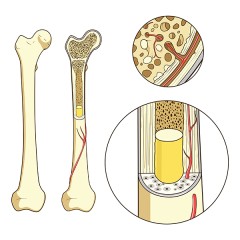
Credit: NIH/National Institute of Arthritis and Musculoskeletal and Skin Diseases (NIAMS)
Bones have three layers:
- The periosteum is a thin membrane covering the bone that contains nerves and blood vessels.
- Compact bone is the dense and hard outer layer of the bone that you see when you look at a skeleton.
- Cancellous bone is inside the compact bone. It is full of holes and looks a little like a sponge. Bone marrow fills in the holes of the sponge.
When you are young, your body builds new bone faster than it breaks down old bone, so your bones become denser and stronger. In most people, bones reach their peak strength and density when they are in their mid- to late 20s. After that, the balance shifts. Old bone breaks down faster than new bone forms.
How to Keep Your Bones Healthy
The habits you build now, especially during childhood and the teen years, can shape your bone health for the rest of your life.
Get Enough Calcium
Your body cannot make calcium on its own, so you must get it from food, drinks, or supplements. The amount you need depends on your age. One 8-ounce glass of milk provides 300 mg of calcium, about one-third of the recommended intake for younger children and a quarter for teens.
Food sources of calcium include:
- Milk, cheese, and yogurt
- Fish such as salmon and tuna
- Leafy green vegetables such as kale and turnip greens
- Tofu set with calcium
- Small fish with bones, including sardines and canned salmon
- Foods fortified with calcium, such as certain brands of juice, soymilk, oatmeal, and breakfast cereal
During pregnancy and breastfeeding, some calcium moves out of the mother’s bones to support the baby’s growth. Temporary decreases in bone density are a normal part of pregnancy and breastfeeding. Bone density is typically restored after pregnancy and during or after weaning.
Get Enough Vitamin D
Vitamin D helps your body absorb the calcium from your food. The amount of vitamin D you need depends on your age. In the United States, most people do not consume enough vitamin D to meet recommended intakes. Some vitamin D can be made in the body with sun exposure, but many people still have low vitamin D levels.
Good food sources of vitamin D include:
- Trout, salmon, tuna, and mackerel
- Fortified milk (most milk in the United States is fortified with vitamin D)
- Fortified ready-to-eat breakfast cereals
- Fortified orange juice
- Eggs
Exercise Regularly
Bones respond to exercise by making new bone tissue, which helps keep them strong. Exercise builds strong bones in children, strengthens muscles and bones in people of all ages, prevents bone loss in adults, and helps prevent falls and fractures.
Protect Your Bones from Injury
- Wear a helmet when biking, scootering, skateboarding, or skating.
- Wear elbow and knee pads to protect your arms and legs.
- Always wear the right safety equipment when playing contact sports.
- Buckle your seatbelt in the car.
Avoiding or Limiting Tobacco and Alcohol
Both tobacco and alcohol can weaken your bones. Dieting, fasting, or exercising too much to lose weight can lead to bone loss.
Helping Kids Build Healthy Bones
Parents can help children build strong bones by helping them maintain a healthy diet, a healthy weight and exercise. Some tips include:
- Joining children for a walk, run, or sport
- Assigning active chores such as walking the dog or raking leaves
- Planning short exercise blocks of 10 or 15 minutes at different times of the day
- Clearing space in a room for physical activity
Bone Disorders and Conditions
Osteoporosis
Osteoporosis is a disease that weakens bones to the point where they can break easily. It is often called a “silent” disease because you typically have no symptoms. You may not know you have it until you break a bone. Fractures can happen in any bone but occur most often in the hip, spine, and wrist. See the Osteoporosis topic page to learn more.
Broken Bones (Fractures)
A broken bone, also called a fracture, can go through only part of the bone or completely through it. Signs of a broken bone include pain, swelling, and bruising.
If you are injured, a doctor may take X-rays to see if a bone is broken. If you break a bone, a doctor may put on a cast, splint, or brace to keep the bone from moving while it heals. Sometimes the doctor must set the bone, or put it back in the right place, before applying the cast or brace. Most broken bones heal within a few months. If you are age 65 or older and have broken a bone, your doctor will probably do testing to find out whether you have osteoporosis.
If you have broken a bone, you might be afraid to exercise. But avoiding exercise can cause you to lose more bone and muscle. Tips for exercising safely include:
- Wear shoes with soles that have strong traction.
- Avoid moving or changing direction quickly on hard or slippery surfaces.
- Keep a chair or sturdy object nearby for support during balance exercises.
- Use a walking aid if you have balance problems.
If you have already broken a bone, it is important for you to take steps to prevent another fracture. Your doctor may recommend:
- Osteoporosis medicines to help prevent fractures in older adults who have had a fracture
- Vitamin D supplements to improve strength, balance, and bone density
- Calcium supplements if you do not get enough calcium from food
- Changes to other medicines that cause dizziness or confusion and raise your risk of falling
- A physical therapy exercise plan to strengthen bones and muscles and reduce the risk of falls
Scoliosis
Your backbone, also called your spine, is made of many small bones called vertebrae that form a line. Scoliosis happens when the spine curves instead of staying straight. Small curves usually do not cause problems. Large curves, or small curves that get worse, can cause health problems.
If a doctor finds a curved spine, they may monitor it over time to make sure the curve does not get worse. For large curves or curves that worsen, doctors treat scoliosis with a back brace or surgery.
Rickets and Osteomalacia
When children do not get enough vitamin D, they can develop rickets. This is a condition where bones are soft, weak, deformed, and painful. In adults, too little vitamin D over time can cause osteomalacia, a painful condition that makes bones and muscles weak and more likely to bend and break.
Risk Factors
Some factors that raise your risk of weak bones or fractures cannot be changed, even if you follow all the healthy habits described above. For example:
- Aging: As you get older, old bone breaks down faster than new bone forms.
- Certain medicines: Some medicines for depression, pain, or heart failure can cause dizziness or confusion, raising the risk of falls.
- Family history: Having a parent with scoliosis makes it more likely that you will have it, too.
- Body weight: If your body weight is at an unhealthy level, this can also be risky for bone health.
Find Clinical Trials
Clinical trials uncover better ways to prevent, diagnose, treat, and understand diseases and conditions. To ensure results apply to everyone, volunteers of all ages, sexes, and backgrounds, including both healthy individuals and those with specific medical conditions, are needed. Find clinical trials on bone health.
Find Treatment
Talk to your healthcare provider if you have any concerns about bone health, including if you:
- Are thinking about taking a calcium or vitamin D supplement
- Have low bone density, osteoporosis, or other physical limitations before starting an exercise program
- Have broken a bone and want to know your risk for osteoporosis
- Are pregnant or breastfeeding and have questions about bone health
Your doctor may refer you to a physical therapist or another healthcare provider to create an exercise plan that is safe for your bone health.
Research Information
The National Institutes of Health (NIH) is the largest public funder of biomedical research in the world. NIH invests most of its budget in medical research seeking to enhance life and to reduce illness and disability. NIH-funded research has led to breakthroughs and new treatments helping people live longer, healthier lives, and building the research foundation that drives discovery.
NIH supports research on bone health. Research has shown that genes determine the timing of peak bone mass (the point in life when bones are at their strongest and densest). But exercise, particularly before puberty, is important for healthy bone growth. The risk of broken bones rises as the score on a bone mineral density test goes down.
Find NIH-funded research projects using NIH RePORTER, a searchable database of current and past research projects supported by NIH and other federal agencies.