 An official website of the United States government




Osteoporosis is a bone disease that weakens bones and makes them more likely to break.
Overview
Osteoporosis is a disease that weakens bones to the point where they can break easily. Fractures most often happen in the hip, spine, and wrist. Both men and women can develop osteoporosis, but women are four times more likely to develop the disease.
Signs and Symptoms
Doctors often call osteoporosis a “silent disease” because most people have no symptoms until a bone breaks. When symptoms do appear, they may include:
- A broken bone from a minor fall or bump that would not normally break a healthy bone
- A broken bone from normal activities like bending, lifting, or coughing
- Severe back pain from a spine fracture
- Loss of height
- A stooped or hunched posture, also called kyphosis
Related Health Effects
Osteoporosis can lead to serious health problems beyond broken bones:
- Broken bones may not heal properly and can cause long-term pain.
- Hip and spine fractures can cause older adults to lose their ability to move around on their own. Fractures may require a long hospital stay or being bedridden for a long time.
Causes and Risk Factors
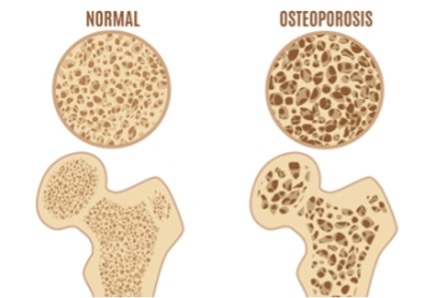
Credit: NIH/National Institute on Aging (NIA)
Bones are made of living tissue. A healthy body constantly breaks down old bone and replaces it with new bone. See the Bone Health topic page to learn more. Osteoporosis develops when more bone breaks down than the body can replace.
Think of the inside of a bone like a honeycomb. When someone has osteoporosis, the walls of that honeycomb (the bone) shrink, the spaces grow larger, and the outer shell of the bone gets thinner. All of this makes bones weaker and easier to break.
Factors You Can't Change
- Age: The risk of osteoporosis increases as you get older. At menopause, women may lose bone mass quickly for several years. By ages 65-70, men and women lose bone mass at the same rate. For older adults, the risk of breaking another bone is highest in the year or two after the first break.
- Sex: Women have lower peak bone mass and smaller bones than men. This makes women more likely to develop osteoporosis.
- Race and ethnicity: White and Asian women are at highest risk. African American and Hispanic women have a lower risk but still have a significant risk. White men are at higher risk than African American and Hispanic men.
- Body size: People with smaller, thinner bones are at greater risk because they have less bone to lose.
- Family history: Having a parent with osteoporosis or who has experienced a hip fracture increases your risk.
Factors You May Be Able to Change
- Diet: A diet low in calcium and vitamin D raises your risk. Too little protein also may increase bone loss.
- Physical inactivity: Low activity levels and long periods of inactivity speed up bone loss.
- Smoking: Smoking is a risk factor for osteoporosis and fracture.
- Alcohol: Heavy drinking is a significant risk factor for osteoporosis.
- Certain medicines: Long-term use of some drugs can cause bone loss. Examples include corticosteroids, antiepileptic medicines, proton pump inhibitors, cancer medicines, selective serotonin reuptake inhibitors (SSRIs), and thiazolidinediones.
- Hormone levels: Low estrogen in women after menopause, low estrogen from missed periods in younger women, and low testosterone in men all can raise the risk.
- Other medical conditions: Conditions like rheumatoid arthritis, gastrointestinal diseases, certain cancers, HIV, and anorexia nervosa can increase risk.
- Low body weight: Being underweight raises the risk of bone loss and broken bones.
Osteoporosis in Children and Teens
Osteoporosis is uncommon in children and teens. When it does occur in young people, it is called juvenile osteoporosis. An underlying disease, medicines, or diet and exercise usually cause juvenile osteoporosis. In very rare cases, doctors cannot find a cause. This is called idiopathic juvenile osteoporosis. Most children with this condition recover without treatment.
Prevention Guidance
You can take steps at any age to protect your bones. Here are key ways to lower your risk:
- Talk with your doctor. Ask about your bone health, especially if you have risk factors for osteoporosis.
- Take prescribed medicines. If your doctor prescribes osteoporosis medicine, it can help prevent fractures.
- Eat foods that support bone health. Get enough calcium, vitamin D, and protein each day. Good calcium sources include low-fat dairy, dark green leafy vegetables, fish, sardines and salmon with bones, and fortified juices, milk, and cereals. Vitamin D is found in fatty fish, egg yolks, liver, and fortified foods like milk and cereals.
- Stay active. Choose weight-bearing exercises, such as walking, hiking, jogging, stair climbing, tennis, and dancing. These activities help build and strengthen bones.
- Do not smoke. Smoking raises your risk of weakened bones. If you smoke, find tips on how to quit smoking.
- Limit alcohol. Heavy drinking harms your bones. Drink in moderation. This means women should not have more than one drink per day, and men should not have more than two drinks per day.
Diagnosis
Osteoporosis rarely has symptoms, so testing is the best way to find it early. Do not wait for a fall or fracture to get checked.
Who should get tested?
- The U.S. Preventive Services Task Force recommends that women older than age 65 get tested.
- Women younger than 65 who have gone through menopause and are at higher risk also should get tested.
- The Task Force does not currently recommend routine screening for men due to a lack of evidence.
- Older men who break a bone easily or who are at risk should talk with their doctor about testing.
- If you are age 65 or older and have broken a bone, your doctor likely will test you for osteoporosis.
Bone Density Tests
The most common test to find osteoporosis is dual-energy X-ray absorptiometry, or DXA. It is quick, painless, and noninvasive. The test uses low levels of X-rays to measure how much calcium and other minerals are in your bones, usually the hip and spine. Bone density measurement by DXA at the hip and spine is generally considered the most reliable way to diagnose osteoporosis and predict fracture risk.
After the test, your doctor will give you a score based on your results.
- If you are a woman after menopause or a man age 50 or older, you will receive a T-score.
- A T-score of –1 or higher means your bones are healthy.
- A T-score between –1 and –2.5 means you have low bone density that is not as severe as osteoporosis.
- A T-score of –2.5 or lower means you may have osteoporosis.
- The risk of broken bones increases 1.5-2 times with each 1-point drop in the T-score.
If you are younger than age 50, your doctor will use a Z-score instead, which compares your bone density to others of your age, sex, and ethnicity. A Z-score of –2.0 or less means your bone density is low.
Your doctor may use other tools to predict your risk of low bone density or fracture, including questionnaires, physical exams, and ultrasounds. In addition, the Fracture Risk Assessment Tool uses your age, sex, medical history, and other factors to estimate your risk of fracture. During a visit, your doctor also may check for loss of height, changes in posture, balance, and muscle strength.
Treatment and Management
The goals of treatment are to slow or stop bone loss and to prevent fractures.
Lifestyle Changes
The same healthy habits that prevent osteoporosis also help treat it. But lifestyle changes alone may not be enough if you have already lost a lot of bone density.
Medicines
Several medicines can help. If you need a medicine, your doctor will choose one based on your age, sex, health, and the amount of bone you have lost.
Medicines that slow bone loss include:
- Bisphosphonates and RANK ligand inhibitors slow bone loss and reduce the risk of fractures.
- Estrogen agonist/antagonist medicines help improve bone density.
- Estrogen and menopause hormone therapies have the additional benefit of preventing osteoporosis when taken to control menopause symptoms.
- Calcitonin is used sparingly in postmenopausal women who cannot take other medicines.
Medicines that help rebuild bone include:
- Parathyroid hormone and its analogs increase bone mass.
- Sclerostin inhibitors block a particular protein to help the body build new bone while slowing bone loss.
No matter which medicine you take, it is still important to get enough calcium and vitamin D and to exercise.
Living With Osteoporosis
Living with osteoporosis means taking steps every day to protect your bones and prevent falls.
Avoid High-Risk Movements
If you have osteoporosis, avoid activities that may cause a fracture. These include movements that twist your spine, like swinging a golf club, or bending forward from the waist, like sit-ups and toe touches. Avoid high-impact exercise.
A physical therapist can recommend safe exercises, teach you how to move safely, and create a program tailored to your needs.
Preventing Falls at Home
Falls are a leading cause of fractures in people with osteoporosis. See the steps below to make your home safer and read our article on Falls for more information.
If you do fall, stay calm. Take a few deep breaths and stay still for a moment. Check if you are hurt before trying to get up. If you are hurt or cannot get up, call for help or call 911.
Other steps to prevent falls include:
- Stand up slowly to avoid dizziness.
- Have your eyes checked at least once a year.
- Ask your doctor or pharmacist about side effects of your medicines, especially those that cause dizziness or confusion.
- Talk with others who have osteoporosis and reach out to family and friends for support.
- Learn about the disease and your treatment options to help you make decisions about your care.
Find Clinical Trials
Clinical trials uncover better ways to prevent, diagnose, treat, and understand diseases and conditions. To ensure results apply to everyone, volunteers of all ages, sexes, and backgrounds, including both healthy individuals and those with specific medical conditions, are needed. Find clinical trials on osteoporosis.
Find Treatment
Many types of healthcare providers treat osteoporosis. These include:
- Primary care providers, such as a family physician or internal medicine specialist
- Endocrinologists, who treat problems related to glands and hormones
- Geriatricians, who specialize in caring for older adults
- Gynecologists, who specialize in women’s reproductive health
- Rheumatologists, who specialize in arthritis and diseases of the bones, joints, and muscles
- Orthopaedic surgeons, who specialize in treatment and surgery for bone and joint diseases
- Physical therapists, who help improve joint function and design safe exercise programs
- Occupational therapists, who teach ways to protect joints and perform daily activities safely
- Physiatrists, who specialize in physical medicine and rehabilitation
- Nurse educators, who help people understand their condition and develop treatment plans
Community Support
Note: This resource list is for informational purposes only. It is not comprehensive, and an organization’s inclusion does not constitute an endorsement by NIH.
Research Information
The National Institutes of Health (NIH) is the largest public funder of biomedical research in the world. NIH invests most of its budget in medical research seeking to enhance life and to reduce illness and disability. NIH-funded research has led to breakthroughs and new treatments helping people live longer, healthier lives, and building the research foundation that drives discovery.
NIH supports research on to better understand risk factors for, prevent, and treat osteoporosis. For example, NIH-funded researchers are studying genetic differences that affect bone formation and turnover. Large studies that compare genes across many people may lead to new ways to prevent bone loss and fractures.
In addition, scientists are studying the cells that control bone remodeling to learn more about the causes of osteoporosis and to identify possible new treatments. And researchers are exploring connections between bone and the nervous system, muscles, the immune system, digestion, and energy metabolism.
Find NIH-funded research projects using NIH RePORTER, a searchable database of current and past research projects supported by NIH and other federal agencies.