 An official website of the United States government




A balance disorder is a condition that makes you feel unsteady or dizzy.
Overview
A balance disorder is a condition that makes you feel unsteady or dizzy. If you are standing, sitting, or lying down, you might feel as if you are moving, spinning, or floating. If you are walking, you might suddenly feel as if you are tipping over.
“Dizziness” can mean different things to different people. For one person, it might mean a fleeting feeling of faintness. For another, it could be an intense sensation of spinning — called vertigo — that can be transient or last a long time.
Balance disorders can affect daily activities and cause psychological and emotional hardship. Many older adults experience problems with balance and dizziness, and balance problems are one reason older people fall.
How Your Brain Helps You Balance
Your sense of balance relies on signals to your brain from several organs and structures in your body, including your eyes, ears, and the muscles and touch sensors in your legs. The part of the ear that assists in balance is known as the vestibular system (or the labyrinth), a complex network of structures in your inner ear made of bone, fluid, and soft tissue).
Within the labyrinth are structures known as semicircular canals. The semicircular canals contain three fluid-filled ducts, which form loops arranged roughly at right angles to one another, and they tell your brain when your head rotates. When signals from this sensory system malfunction, you can have problems with your sense of balance, including dizziness or vertigo.
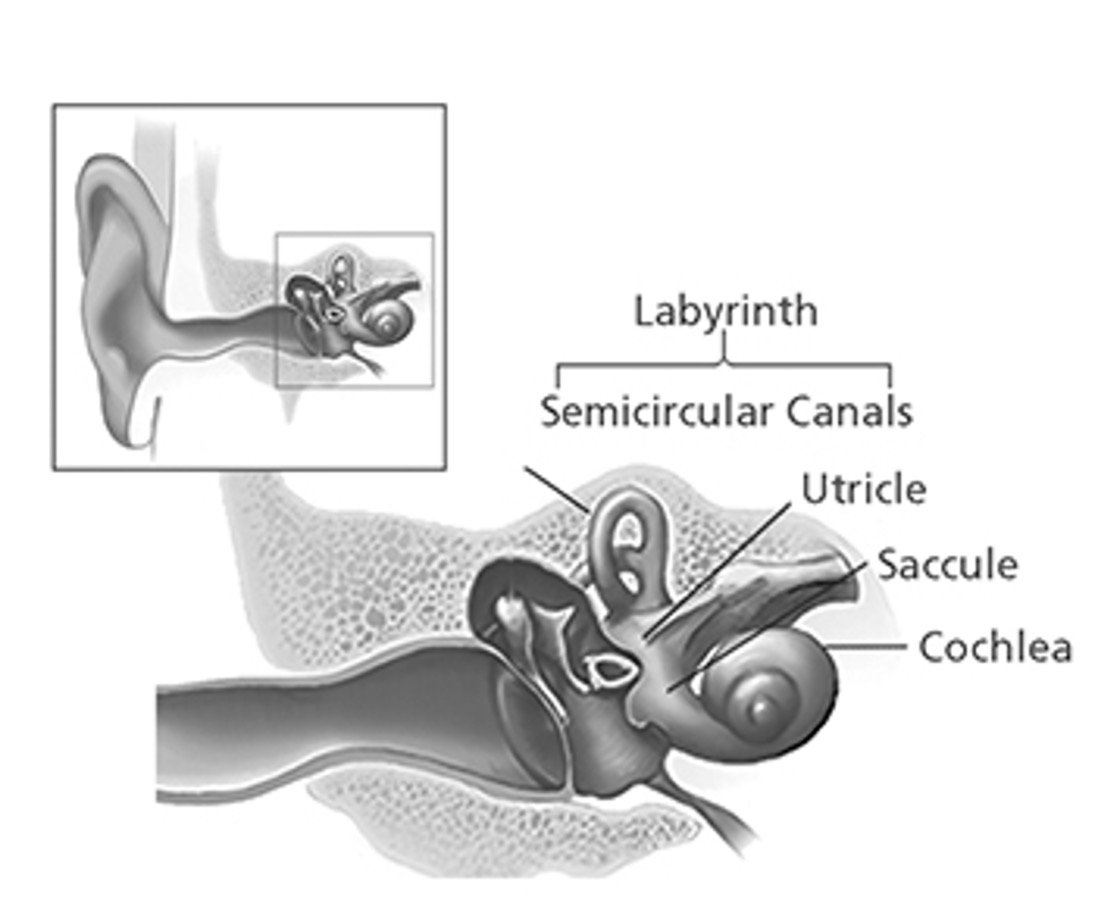
Source: NIH/National Institute on Deafness and Other Communication Disorders (NIDCD)
The cupula is a small, dome-shaped, jelly-like structure inside each semicircular canal. When you turn your head, fluid inside the semicircular canals moves, causing the cupula to flex or billow like sails in the wind. This motion bends the stereocilia, the tiny projections of the hair cells that sit inside the cupula. This bending creates a nerve signal that is sent to your brain to tell it which way your head has turned.
Between the semicircular canals and the cochlea (a snail-shaped, fluid-filled structure in the inner ear) lie two otolithic organs: fluid-filled pouches called the utricle and the saccule. These organs tell your brain the position of your head with respect to gravity, such as whether you are sitting up, leaning back, or lying down, as well as any direction your head might be moving, such as side to side, up or down, forward or backward.
The utricle and the saccule also have sensory hair cells lining the floor or wall of each organ, with stereocilia extending into an overlying gel-like layer. Here, the gel contains tiny, dense grains of calcium carbonate called otoconia. Whatever the position of your head, gravity pulls on these grains, which then move the stereocilia to signal your head’s position to your brain. Any head movement creates a signal that tells your brain about the change in head position.
When you move, your vestibular system detects mechanical forces, including gravity, that stimulate the semicircular canals and the otolithic organs. These organs work with other sensory systems in your body, such as your vision and your musculoskeletal sensory system, to control the position of your body at rest or in motion. This helps you maintain stable posture and keep your balance when you’re walking or running. It also helps you keep a stable visual focus on objects when your body changes position.
When the signals from any of these sensory systems malfunction, you can have problems with your sense of balance, including dizziness or vertigo. If you have additional problems with vision or with motor control, such as weakness, slowness, tremor, or rigidity, you can lose your ability to recover properly from imbalance. This raises the risk of falling and injury.
Signs and Symptoms
If you have a balance disorder, your symptoms might include:
- Dizziness or vertigo (a spinning sensation)
- Falling or feeling as if you are going to fall
- Staggering when you try to walk
- Lightheadedness, faintness, or a floating sensation
- Blurred vision
- Confusion or disorientation
Other symptoms might include nausea and vomiting; changes in heart rate and blood pressure; and fear, anxiety, or panic. Symptoms may come and go over short time periods or last for a long time, and can lead to fatigue and depression.
Types of Balance Disorders
There are more than a dozen different balance disorders. Some of the most common are:
Benign Paroxysmal Positional Vertigo (BPPV) or Positional Vertigo
A brief, intense episode of vertigo triggered by a specific change in the position of the head. You might feel as if you’re spinning when you bend down to look under something, tilt your head to look up or over your shoulder, or roll over in bed. BPPV occurs when loose otoconia tumble into one of the semicircular canals and affect the normal flow of fluid, which sends incorrect information about your head’s position to your brain, and causing vertigo. BPPV can result from a head injury or can develop just from getting older.
Labyrinthitis
An infection or inflammation of the inner ear that causes dizziness and loss of balance. It is often associated with an upper respiratory infection, such as the flu.
Ménière’s Disease
Characterized by episodes of vertigo, hearing loss, tinnitus (a ringing or buzzing in the ear), and a feeling of fullness in the ear. It may be associated with a change in fluid volume within parts of the labyrinth, but the cause or causes are still unknown. Constricted blood vessels, viral infections, allergies, or autoimmune reactions may contribute to Ménière’s disease. Genetic variations could also play a role, since Ménière’s disease sometimes affects more than one family member. The symptoms of Ménière’s disease are associated with a fluid imbalance in the labyrinth that disrupts normal balance and hearing signals between the inner ear and the brain.
Vestibular Neuronitis
An inflammation of the vestibular nerve that can be caused by a virus, and primarily causes vertigo.
Perilymph Fistula (most often referred to as Perylmphatic Fistula)
A leakage of inner ear fluid into the middle ear. It causes unsteadiness that usually increases with activity, along with dizziness and nausea. Perilymph fistula can occur after a head injury, dramatic changes in air pressure (such as when scuba diving), physical exertion, ear surgery, or chronic ear infections. Some people are born with perilymph fistula.
Mal de Debarquement Syndrome (MdDS)
A feeling of continuously rocking, swaying, or bobbing, typically after an ocean cruise or other sea travel, or even after prolonged running on a treadmill. Usually, the symptoms go away within a few hours or days after the triggering stimulus is over. Severe cases, however, can last months or even years, and the cause remains unknown.
Vestibular Schwannoma
A vestibular schwannoma (also known as acoustic neuroma, acoustic neurinoma, or acoustic neurilemoma) is a benign, usually slow-growing tumor that develops from the balance and hearing nerve that connects the inner ear to the brain. As the vestibular schwannoma grows, it affects the hearing and balance nerves, usually causing unilateral (one-sided) or asymmetric hearing loss, tinnitus (ringing in the ear), and dizziness/loss of balance. As the tumor grows, it can cause numbness or facial weakness.
Causes and Risk Factors
Many balance disorders start suddenly and with no obvious cause. However, common causes of balance problems include:
- Certain medicines can cause balance problems. Ask your doctor if other medicines can be used instead, if the dosage can be safely reduced, or if there are other ways to reduce unwanted side effects.
- Inner ear inflammation can cause vertigo and imbalance. Certain ear diseases and infections can cause inflammation.
- Head injury can injure ear or brain structures and cause balance problems.
- Low blood pressure can lead to dizziness when you stand up too quickly .
- Alcohol in the blood can cause dizziness and balance problems by affecting how the inner ear works.
- Problems that affect the skeletal or visual systems, such as arthritis or eye muscle imbalance can cause balance problems.
- Other medical conditions, such as diabetes, heart disease, stroke, or problems with your vision, thyroid, nerves, or blood vessels, can cause dizziness and other balance problems.
- Older age can increase your risk of having balance problems.
Prevention Guidance
People are more likely to have problems with balance as they grow older, but in some cases, you can help reduce your risk for certain balance problems.
The risk of falling increases with age, and falls can be particularly dangerous for older adults, often causing fractures, hospitalization, and disability. Maintaining good balance as you age and learning about fall risks can help you get around, stay independent, and carry out daily activities.
To reduce your risk of injury from falls:
- Avoid walking in the dark
- Wear low-heeled, nonskid, rubber-soled shoes outdoors
- Do not walk on stairs or floors in socks or in shoes and slippers with smooth soles
- Use a cane or walker if necessary
- Add safety features at home and workplace, such as handrails
Diagnosis
Self-Assessment
To help you decide whether to seek medical help for dizziness or balance problems, ask yourself the following questions. If you answer “yes” to any of these, talk to your doctor:
- Do I feel unsteady?
- Do I feel as if the room is spinning around me, even for a very brief time?
- Do I feel as if I’m moving when I know I’m sitting or standing still?
- Do I lose my balance and fall?
- Do I feel as if I’m falling?
- Do I feel lightheaded or as if I might faint?
- Do I have blurred vision?
- Do I ever feel disoriented — losing my sense of time or location?
You can help your doctor make a diagnosis and determine a treatment plan by being prepared to discuss the following at your appointment:
- Describe your dizziness or balance problem, including whether there is a spinning sensation, what triggers it, and whether other symptoms occur at the same time (such as hearing loss, tinnitus, a feeling of pressure in one or both ears, or a headache)
- How often you feel dizzy or have trouble keeping your balance, and how long the episodes last
- Whether you have ever fallen, and when, where, and under what conditions
- All medicines you take, including prescription medicines, over-the-counter medicines, vitamin supplements, and alternative or homeopathic remedies
Formal Medical Assessment
To find out if you have a balance problem, your primary doctor may suggest that you see an otolaryngologist, who is a physician specializing in diseases and disorders of the ear, nose, and throat. Sometimes referred to as ENTs, otolaryngologists work closely with audiologists who are specialists in hearing and vestibular systems.
You may be asked to participate in one or more tests, including:
- A hearing examination
- Blood tests
- Videonystagmography (a test that measures voluntary and involuntary eye movements and measures the reactivity of the vestibular system and the regions of the central nervous system that coordinate those eye movements.) This often involves delivering air or water to the ear canal to stimulate the vestibular system.
- Imaging studies of your head and brain
- Posturography (where you stand on a special platform in front of a patterned screen to test how well you can maintain steady balance during different conditions)
- Rotational chair testing
- Brisk head-shaking testing
- Tests that measure eye or neck muscle responses to brief clicks of sound
- Using water in the ear canal to stimulate the vestibular system and observe the resulting eye movements.
Because the vestibular system is complex, multiple tests may be needed to best evaluate the cause of your balance problem.
Treatment and Management
The first thing an otolaryngologist will do if you have a balance problem is determine if another health condition or a medicine is to blame. If so, your doctor will treat the condition, suggest a different medicine, or refer you to a specialist.
Benign Paroxysmal Positional Vertigo
Your otolaryngologist or audiologist might perform a series of simple movements, such as the Epley maneuver, to help dislodge the otoconia from the semicircular canal. In many cases, one session works; other people need the procedure several times to relieve their dizziness.
Ménière’s Disease
There is no cure yet for Ménière’s disease, and because symptoms can vary widely, the benefit of treatment options can be hard to gauge. Your doctor may recommend one or more of the following:
- Dietary and behavioral changes: Limiting dietary salt and taking a diuretic (“water pill”) may help control symptoms. Quitting smoking may also reduce symptoms.
- Medicines: Prescription drugs can help relieve dizziness and shorten the attack, particularly when taken soon after the dizziness starts. Anti-vertigo or anti-nausea medicines may relieve symptoms, but they can also make you drowsy.
- Vestibular rehabilitation and physical therapy: A doctor may recommend vestibular rehabilitation and/or physical therapy if you have chronic balance issues.
- Injections: Injecting the antibiotic gentamicin into the ear helps to control vertigo but can raise the risk of hearing loss because gentamicin can damage the microscopic hair cells in the inner ear. Corticosteroid injections are an alternative because they often reduce dizziness and have little to no risk of hearing loss.
- Surgery: Surgery may be recommended when all other treatments have failed to relieve dizziness. One surgical procedure decompresses the endolymphatic sac; another, used less frequently, cuts the vestibular nerve.
Although scientists have studied using alternative therapies for Ménière’s disease, there is no evidence to show the effectiveness of acupuncture or acupressure, tai chi, or herbal supplements, including ginkgo biloba, niacin, or ginger root. Be sure to tell your doctor if you are using alternative therapies, since they can sometimes influence the effectiveness or safety of conventional medicines.
Vestibular Schwannoma
There are three options for managing a vestibular schwannoma:
- Surgical removal
- Radiation
- Observation
Multiple surgical approaches exist—some that can preserve hearing and some in which hearing will be lost entirely. The surgical approach depends on the size and location of the tumor, among other factors.
As an alternative to conventional surgical techniques, radiosurgery (radiation therapy — the “gamma knife” or LINAC) may be used to reduce the size or limit the growth of the tumor. Radiation therapy is sometimes the preferred option for older patients, patients in poor medical health, patients with bilateral vestibular schwannoma, or patients whose tumor is affecting their only hearing ear. When the tumor is small and not growing, it may be reasonable to monitor the tumor for growth using MRI scans.
Exercise-based Treatment
Exercises that involve moving the head and body in certain ways can help treat some balance disorders. Patient-specific exercises are developed by a physical therapist or other professional who understands balance and its relationship with other systems in the body.
Living With a Balance Disorder
Some people with a balance disorder may not be able to fully relieve their dizziness and will need to find ways to cope with it. A vestibular rehabilitation therapist can help you develop an individualized treatment plan.
Chronic balance problems can affect all aspects of your life, including your relationships, work performance, and your ability to carry out daily activities. Support groups provide the opportunity to learn from other people with similar experiences and challenges.
Talk to your doctor about whether it’s safe to drive, and about ways to lower your risk of falling and getting hurt during daily activities — such as when you walk up or down stairs, use the bathroom, or exercise.
Find Clinical Trials
Clinical trials uncover better ways to prevent, diagnose, treat, and understand diseases and conditions. To ensure results apply to everyone, volunteers of all ages, sexes, and backgrounds, including both healthy individuals and those with specific medical conditions, are needed. Find clinical trials on balance disorders.
Research Information
The National Institutes of Health (NIH) is the largest public funder of biomedical research in the world. NIH invests most of its budget in medical research seeking to enhance life and to reduce illness and disability. NIH-funded research has led to breakthroughs and new treatments helping people live longer, healthier lives, and building the research foundation that drives discovery.
Scientists supported by NIH are studying animal ears to learn if inner-ear structures that help with balance but are destroyed by aging, medicines, infections, or trauma can someday be regrown in people with balance problems. Other NIH-supported scientists are testing vestibular prostheses — miniature devices that may be worn outside the body or implanted into the ear to regulate the function of balance organs in the inner ear and ease dizziness. Some of these devices are being tested on volunteers in clinical trials, and others are still being developed.
Scientists are also working to develop much-needed tests to appropriately diagnose balance disorders. Standardized tests will help doctors determine the best way to help individuals restore their sense of balance and quality of life and will also help track whether the sense of balance is restored following treatment.
For Ménière’s disease, NIH is supporting scientific research that seeks to:
- Better understand the structures of the inner ear and the mechanisms that determine normal endolymphatic sac pressure
- Determine why some common antibiotics damage inner ear hair cells, vital for balance and hearing, in some people but not in others
For vestibular schwannoma, scientists continue studying the molecular pathways that control normal Schwann cell development to better identify gene mutations that result in vestibular schwannomas. Scientists are also developing robotic technology to assist physicians with acoustic neuroma surgery.
Find NIH-funded research projects using NIH RePORTER, a searchable database of current and past research projects supported by NIH and other federal agencies.