 An official website of the United States government




Healthy aging involves managing your physical, mental, and cognitive health to live as independently as possible and maintain quality of life as you grow older.
Overview
Many factors influence healthy aging. Some, like genetics, are not under our control. Others, like exercise, a healthy diet, going to the doctor regularly, and taking care of mental health, are within our reach. Even making small changes in your daily life can help you live longer and better.
Taking care of your health involves staying active, making healthy food choices, getting enough sleep, limiting alcohol intake, and proactively managing your healthcare.
Common Effects of Aging
Changes in Thinking
Cognition, or the ability to clearly think, learn, and remember, often changes as we age. Although some people develop Alzheimer’s disease or other types of dementia, many older adults experience more modest, and manageable, changes in memory and thinking.
Older adults may:
- Be slower to find words and recall names
- Have problems with multitasking
- Experience mild decreases in the ability to pay attention
These changes can affect cognitive performance even in healthy older people. However, if given enough time to learn a new task, older adults usually perform just as well as younger people. Needing extra time is normal as people age.
Aging may also bring positive cognitive changes. For example, studies have shown that older adults have larger vocabularies and greater knowledge of the depth of meaning of words than younger adults, which can lead to more creative problem solving and better decision-making.
Changes in Emotions
Older adults can experience depression as they age. Although depression is common in older adults, it can be difficult to recognize. For some older adults with depression, sadness is not their main symptom. Instead, they may have a lack of appetite, sleep problems, or be uninterested in activities they once enjoyed. They also may not be as willing to talk about their feelings.
Depression not only affects mental health, but also physical health. Depression increases the risk of health problems in our brain and body.
If you are thinking of harming yourself, get help immediately. Call or text the 24-hour 988 Suicide and Crisis Lifeline, chat at 988lifeline.org at 988 or 800-273-TALK (800-273-8255). For TTY, use your preferred relay service or dial 711 then 988.
Changes in Muscle Function
As people age, muscle function often declines. Both obesity and underweight conditions can lead to loss of muscle mass, which may cause a person to feel weak and easily worn out.
Increased Risk for Disease
As we age, our bodies gradually become less efficient. Our organs do not work as well as they used to, our immune system can become overactive and cause harmful inflammation, and the cells that make up our bodies can start to malfunction as they divide and replace themselves. These changes increase the risk of:
- Cardiovascular disease, including heart disease and stroke
- High blood pressure
- Type 2 diabetes
- High cholesterol
- Obesity
- Cancers of the bladder, breast, colon, endometrium, esophagus, kidney, lung, and stomach
- Dementia
- Arthritis
- Infectious diseases, such as influenza
Lifestyle Interventions for Healthy Aging
Maintain a Healthy Weight
As people age, metabolism, or how the body gets energy from food, can change. This means that some older adults must become more active or eat fewer calories to maintain or achieve their ideal weight.
Elevated body mass index (BMI) in older adults can increase the likelihood of developing health problems, including heart disease, high blood pressure, stroke, and diabetes. Obesity — a known risk factor for heart disease — may also be associated with an increased risk for developing dementia.
Being underweight also increases the chance of developing health problems—and often does not improve by just eating more food. A low BMI may make a person more likely to develop medical problems such as osteoporosis and anemia, which occurs when your body doesn’t make enough red blood cells. A low BMI may also make it harder to recover from an illness or infection. It’s important to consult with your doctor about weight loss during aging to find potential causes and solutions.
Manage Blood Pressure
Preventing or controlling high blood pressure not only helps your heart but can also help your brain.
Stay Physically Active
People who exercise regularly not only live longer but also may live better. They enjoy more years of life without pain or disability. On the other hand, lack of physical activity can lead to increased visits to the doctor, more hospitalizations, and increased risk of certain chronic conditions.
Older adults who are physically active have a lower risk of diseases associated with aging.
Movement and exercise may also offer protection against loss of bone density, known as osteoporosis, and age-related loss of muscle mass, strength, and function, and potentially even premature death.
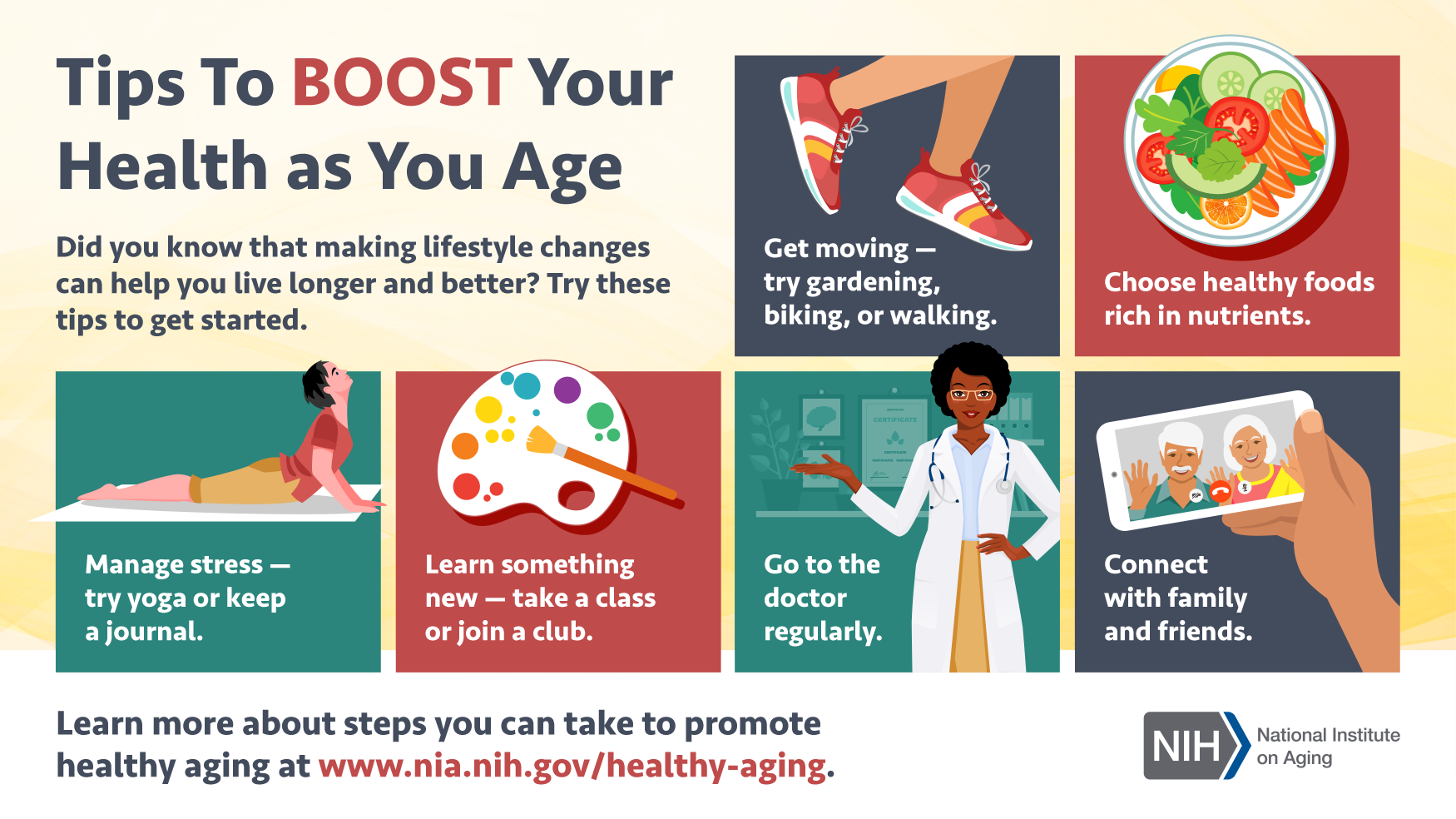
Try being physically active in short spurts throughout the day or setting aside specific times each week to exercise. Experts recommend at least 150 minutes per week of moderate-intensity aerobic exercise, and muscle-strengthening activities at least two days each week. Many activities, such as brisk walking or yoga, are free or low cost and do not require special equipment. If you have a chronic health condition or are recovering from an illness or injury, check with your doctor before starting a new routine.
Try these exercise ideas:
- Walking, bicycling, or dancing: Endurance activities increase your breathing, get your heart pumping, and boost chemicals in your body that may improve mood.
- Strength training: Lifting weights, using resistance bands, or doing bodyweight exercises like push-ups and squats helps maintain muscle mass and bone density — both of which naturally decline with age. Strong muscles also support your joints and can help prevent falls.
- Meditative exercise forms like yoga, tai chi, and qigong: These psychological and physical exercise programs may benefit cognitive function in older adults without cognitive impairment. Tai chi and qigong also may reduce the risk of falling in older adults. There is evidence that tai chi may improve balance and stability both during normal aging and in people with neurodegenerative conditions, including Parkinson’s disease and stroke.
- An activity you enjoy: Whether it’s gardening, playing tennis, or kicking around a soccer ball with your grandchildren, choose an activity that you want to do, not have to do.
Eat a Healthy Diet
A nutritious diet involving a variety of fresh fruits and vegetables, whole grains, healthy fats, and lean proteins can help strengthen the immune system and lower the risk of certain health problems such as heart disease, high blood pressure, obesity, type 2 diabetes, stroke, and some cancers.
Sleep Well
People who sleep more may have a lower risk for health and cognitive problems as they age. For example, getting good sleep helps the body process sugar more effectively, decreasing risk for type 2 diabetes. Getting enough good-quality sleep also lowers risk for heart disease and obesity.
Don’t Smoke
Research confirms that even if you’re 60 years of age or older and have been smoking for decades, quitting will improve your health. Quitting smoking at any age will:
- Lower your risk of cancer, heart attack, stroke, and lung disease
- Improve your blood circulation
- Improve your sense of taste and smell
- Increase your ability to exercise
- Set a healthy example for others
Visit 60plus.smokefree.gov for resources on how to quit smoking as an older adult.
Limit Alcohol
As people age, changes in their bodies, as well as in their physical and mental health, may cause alcohol to affect them differently than when they were younger and put them at greater risk for negative consequences. Alcohol misuse by older adults is associated with faster cognitive decline, such as problems with memory, thinking, and judgment. In addition, alcohol misuse can increase the risk of—or worsen—medical conditions that are more common with aging, such as chronic pain, cardiovascular disease, diabetes, and respiratory infections. Alcohol misuse is also associated with an increased risk of various types of cancer.
Many older adults take medicines that could interact with alcohol. These interactions could cause the medicines to not work properly or make them dangerous or even deadly.
Stay Connected
Older adults who are socially isolated or feel lonely are at higher risk for heart disease, depression, and cognitive decline. Staying connected with others may help boost your mood and improve your overall well-being.
Here are some ways to stay connected:
- Schedule daily, weekly, or biweekly phone calls or video chats.
- Encourage seeking out others with shared interests, such as through a garden club, volunteer organization, or walking group.
Manage Stress
Stress and anxiety rewire the brain in ways that can impact memory, decision-making, and mood. You can help manage stress with meditation techniques, physical activity, and by participating in activities you enjoy. Keeping a journal may also help you identify and challenge negative and unhelpful thoughts.
Give Your Brain a Workout
Cognitive training, which is designed to improve specific cognitive skills, appears to have benefits for maintaining cognitive health in older adults. However, there is currently not enough evidence to suggest that commercially available computer-based brain-training applications are as effective as methods used in the research to support this conclusion.
Don’t Avoid the Doctor
Regular health screenings can uncover diseases and conditions you may not yet be aware of, such as high blood pressure, diabetes, cancer, and cardiovascular disease. Doctors can also help patients make decisions about medicines and managing their side effects.
Some medicines and combinations of medicines can cause confusion, memory loss, hallucinations, and delusions in older adults. Drugs that can impair older adults’ cognition include:
- Antihistamines for allergy relief
- Sleep aids
- Antipsychotics
- Muscle relaxants
- Drugs that treat urinary incontinence
- Medicines for relief of cramps in the stomach, intestines, and bladder
Visit the doctor at least yearly and possibly more depending on your health. A 2021 study found that getting regular check-ups helps doctors catch chronic diseases early and can help patients reduce risk factors for disease, such as high blood pressure and cholesterol levels.
Talk with your doctor if you have any concerns about your medicines or possible side effects. Do not stop taking any prescribed medicines without consulting your healthcare provider first.
Support Loved Ones as They Age
Behavior changes can be difficult and take time. If you are committed to helping your older loved ones adopt healthier lifestyles, try to be patient. If something isn’t working right away, stick with it or try a different approach. Your support and encouragement can make a difference.
Healthy behavior changes can help older adults live more independently later in life. That is important both for their quality of life and for yours. If a family member loses independence, whether it is due to disability or chronic disease, you may find yourself in a caregiving role earlier than expected, which can affect family dynamics as well as finances.
To support your older loved ones’ doctor visits:
- Encourage them to reach out to their doctor immediately if they’re experiencing pain or any new symptoms.
- Help them manage medicines and maintain a current list of all prescriptions, over-the-counter medicines, and supplements.
- Offer to drive them to appointments or go with them and take notes.
Find Clinical Trials
Clinical trials uncover better ways to prevent, diagnose, treat, and understand diseases and conditions. To ensure results apply to everyone, volunteers of all ages, sexes, and backgrounds, including both healthy individuals and those with specific medical conditions, are needed. Find clinical trials on healthy aging.
Community Support
- AmeriCorps Seniors
- Experience Corps — AARP Foundation
- America’s Natural and Cultural Resources Volunteer Portal
- Global Council on Brain Health (a collaborative from AARP) provides information on brain health relating to people’s ability to think and reason as they age, including aspects of memory, perception and judgment.
- Eldercare Locator is a nationwide service that connects older adults and their caregivers with trustworthy local support resources.
- National Council on Aging
Note: This resource list is for informational purposes only. It is not comprehensive, and an organization’s inclusion does not constitute an endorsement by NIH.
Research Information
The National Institutes of Health (NIH) is the largest public funder of biomedical research in the world. NIH invests most of its budget in medical research seeking to enhance life and to reduce illness and disability. NIH-funded research has led to breakthroughs and new treatments helping people live longer, healthier lives, and building the research foundation that drives discovery.
NIH conducts and funds research into many factors believed to influence aging.
Some areas of study include:
- The benefits factors which could be protective from cognitive decline during aging, such as exercise, leisure activities, and social connection
- Studying how and why some older adults are resilient against cognitive decline during aging
- How controlling blood pressure impacts healthy aging
Find NIH-funded research projects using NIH RePORTER, a searchable database of current and past research projects supported by NIH and other federal agencies.