 An official website of the United States government




Uterine fibroids are growths made of smooth muscle cells, fibroblasts, and other material that grow in or on the wall of the uterus, also called the womb. Many women with fibroids do not know they have them. Some women have uncomfortable and painful symptoms.
Overview
Uterine fibroids are growths made of smooth muscle cells, fibroblasts, and other material that grow in or on the wall of the uterus, also called the womb. They are the most common noncancerous tumors in women of childbearing age.
Fibroids can grow as a single tumor or in bunches or clusters. In many cases, a single uterus contains many fibroids. They can be different sizes and shapes. They also can grow, shrink, or stay the same size over time.
The good news is that it is extremely rare for uterine fibroids to develop into cancer.
There are different types of fibroids. The type is determined based on where it grows within the uterus:
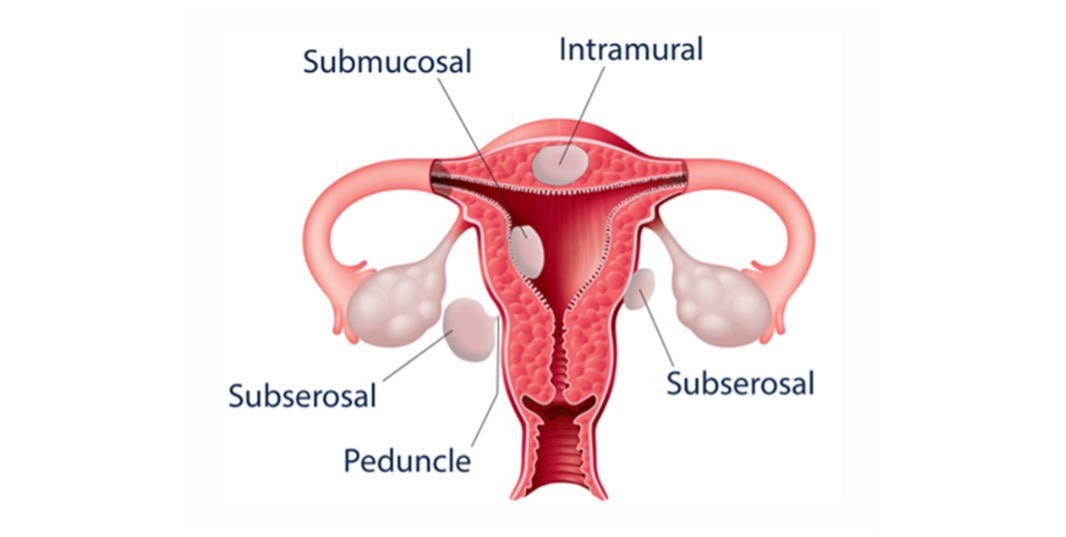
- Submucosal fibroids grow just underneath the uterine lining and into the inner cavity of the uterus.
- Intramural fibroids grow between the muscles of the uterus.
- Subserosal fibroids grow on the outside of the uterus.
- Pedunculated fibroids grow on stalks that extend from the surface of the uterus or into the uterine cavity.
Related Term: Leiomyomas
Signs and Symptoms
Many women have no symptoms of fibroids. However, uterine fibroids can cause uncomfortable or sometimes painful symptoms, such as:
- Heavy bleeding or painful periods
- Anemia (when you don’t have enough red blood cells)
- Bleeding between periods
- Feeling “full” in the lower belly, sometimes called pelvic pressure
- Frequent urination, caused by a fibroid pressing on the bladder
- Pain during sex
- Lower back pain
- Reproductive problems, such as infertility, multiple miscarriages, and early onset of labor during pregnancy
- Obstetrical problems, such as an increased chance of caesarean delivery, (also called a C-section)
It is important to know that even small fibroids can cause severe symptoms like heavy periods and significant discomfort.
Related Health Effects
Fibroids can make it hard to get pregnant or stay pregnant. Certain kinds of fibroids may change shape and size inside the uterus. This can affect a woman’s ability to get pregnant, even with in vitro fertilization.
Fibroids can also cause pregnancy complications, including:
- Miscarriage
- Preterm delivery
- Abnormal position of the fetus
- The need for caesarean delivery, or C-section
- Heavy bleeding after delivery
Many women who have fibroids get pregnant naturally. Treating fibroids can improve your chances of getting and staying pregnant.
Causes and Risk Factors
Researchers do not know what causes uterine fibroids. There are many factors that might play a role in fibroid growth:
- Genetics, including mutations in the MED12, HMGA2, COL4A5/COL4A6, or FH genes
- The hormones estrogen and progesterone
- Growth hormones
- Micronutrients, like iron, that the body needs only small amounts of in the blood. For instance, a lack of vitamin D may be associated with uterine fibroids
- Major stresses
Factors that may raise the risk of fibroids include:
- Age (older women face higher risk than younger women)
- Being African American
- Having obesity
- Family history of uterine fibroids
- High blood pressure
- No history of pregnancy
- Vitamin D deficiency
- Food additive consumption
- Use of soybean milk
Researchers also believe that exposure to certain pollutants, such as pesticides and industrial chemicals, may increase fibroid risk by affecting human hormones.
Factors that may lower the risk of fibroids include:
- Pregnancy (risk decreases with an increasing number of pregnancies)
- Long-term use of oral or injectable contraceptives
Diagnosis
Women often do not know they have fibroids unless they have symptoms. In some cases, healthcare providers find fibroids during a routine gynecological exam.
During a routine exam, the healthcare provider checks the size of your uterus by putting two fingers of one hand into the vagina while pressing lightly on your abdomen with the other hand. If you have fibroids, your uterus may feel larger than normal or irregularly shaped.
If you have symptoms but your healthcare provider cannot feel any fibroids during a routine exam, they may use imaging technology to diagnose uterine fibroids. Common types of imaging technology include:
- Ultrasound, which uses sound waves to form a picture
- Saline infusion sonography, which uses an injection of salt solution into the uterus to help create the ultrasound image
- Magnetic resonance imaging (MRI), which uses magnets and radio waves to create a picture
- X-rays, which use electromagnetic radiation to see inside the body
- Computed tomography (CT) or computer-assisted tomography, which scans the body with X-rays from many angles to create a more complete picture
Treatment and Management
Your healthcare provider will consider several factors before recommending a treatment for your fibroids, including:
- Your age
- Your general health
- How severe your symptoms are
- Where your fibroids are located
- The type and size of the fibroids
- Whether you are pregnant now or want to get pregnant in the future
If your fibroids are not causing symptoms or problems, you may not need treatment. You can ask your healthcare provider to monitor the fibroids at routine gynecological exams. If you are close to menopause, your fibroids may already be shrinking. This is common during and after menopause.
Medicine
Depending on your symptoms, your healthcare provider may suggest medicines to reduce symptoms or stop fibroid growth. Certain medical treatments to reduce fibroid size and blood loss may be used in combination with other treatments. Keep in mind that medicines may give only temporary relief. Once you stop treatment, fibroids can grow back, and symptoms can return.
Common medical treatments for fibroids include:
- Pain medicine: Over the counter or prescription medicine is often used for mild or occasional pain.
- Birth control pills or other types of hormonal birth control: These medicines help control heavy bleeding and painful periods, but this therapy can sometimes cause fibroids to grow larger.
- Progestin-releasing intrauterine device (IUD): The hormonal IUD, also called intrauterine contraception (IUC), reduces heavy and painful bleeding but does not treat the fibroids themselves. It is not recommended for women who have very large fibroids.
- Gonadotropin-releasing hormone agonists (GnRHa): These medicines block the body from making the hormones that cause ovulation and periods, and they also reduce fibroid size. These medicines can cause menopause-like side effects and bone loss, so they should not be used for long periods of time. They are most often used for a short time before surgery or to treat anemia.
- Antihormonal agents or hormone modulators (such as selective progesterone receptor modulators): These drugs—including ulipristal acetate, mifepristone, and letrozole—can slow or stop fibroid growth, reduce bleeding, and improve symptoms.
Medicines are generally safe, but they can have side effects, some of which may be serious. Always talk to your healthcare provider about possible side effects before starting any treatment.
Hysterectomy
A hysterectomy is a surgery that removes the uterus. It is the only certain cure for uterine fibroids:
Healthcare providers may recommend this option if you are near or past menopause and have large fibroids or very heavy bleeding.
Important: Having a hysterectomy means you will no longer be able to get pregnant, and this cannot be reversed. Be certain about your choice before having the surgery.
During a hysterectomy, the whole uterus or just part of it is removed. There are several ways to perform a hysterectomy:
- Abdominal hysterectomy: The surgeon removes the uterus through a cut in the abdomen. This incision may be similar to what is done during a C-section. This type of hysterectomy requires a longer hospital stay and recovery time than others. Removal of the ovaries is not required for treatment of fibroid symptoms. Similarly, some women may desire to preserve the cervix (the opening of the uterus) if there is no history of abnormal Pap smears.
- Vaginal hysterectomy: The surgeon removes the uterus through the vagina. Recovery time is usually shorter (three to four weeks) than an abdominal hysterectomy because it is a less invasive method. Vaginal hysterectomy may not be an option if your fibroids are very large.
- Laparoscopic hysterectomy: Minimally invasive approaches include laparoscopic hysterectomy, laparoscopy-assisted vaginal hysterectomy, and robotic-assisted laparoscopic hysterectomy. Not all cases of uterine fibroids can be treated with such approaches, but these methods may result in reduced postoperative recovery time.
- Robotic hysterectomy: Robotic hysterectomy is becoming more common. The surgeon sits at a console near the patient and guides a robotic arm to perform laparoscopic surgery. Like laparoscopic myomectomies, this technique requires only small incisions in the uterus and abdomen. As a result, recovery can be shorter (three to four weeks) than with more invasive procedures. More research is needed to understand how (and how well) these procedures work and to compare the outcomes with those of other established surgical treatments.
If you have not gone through menopause and are considering a hysterectomy, talk to your healthcare provider about keeping your ovaries. The ovaries make hormones that help maintain bone density and sexual health even if the uterus is removed.
Other Treatments
There are several other treatments to treat fibroids that are less invasive than hysterectomy. These methods include:
- Endometrial ablation destroys the lining of the uterus and treats small fibroids inside the uterus. Ablation can be done using electric currents, microwave energy, or freezing. Pregnancy is unlikely after this procedure, but it can happen. Women who do get pregnant after ablation have a higher risk of miscarriage and other problems.
- Uterine artery embolization (UAE), also called uterine fibroid embolization (UFE), is a procedure where the doctor makes a small cut in the groin area, inserts a tube (called a catheter) into the large blood vessel there, and slides the tube until it reaches the arteries that supply blood to the uterus. They then inject tiny plastic or gel particles through the tube into the arteries. The particles block blood flow to the fibroids, so they eventually shrink and may relieve symptoms. Most healthcare providers do not recommend UAE for women who want to have children.
- MRI-guided focused ultrasound destroys fibroids using high-intensity ultrasound waves directed through the skin. It is usually recommended for women who have only a few large fibroids. Because this is a relatively new treatment, your healthcare provider may not offer it, or your health insurance may not pay for it. It may also affect how ovaries function.
- Myomectomy is a surgical procedure removes the fibroids and leaves the healthy uterus intact. It can preserve the ability to get pregnant. The original fibroids do not regrow after surgery, but new fibroids may develop.
Myomectomy can be performed in one of three ways:
- Hysteroscopy: The surgeon inserts a thin telescope through the vagina and cervix. The doctor then uses electricity or a mechanical device to cut or destroy the fibroids. The doctor will inject fluid into the uterus to make it easier to see before trying to remove the fibroids.
- Laparotomy: The surgeon removes the fibroids through a cut in the abdomen.
- Laparoscopy: The surgeon uses a long, thin telescope to see inside the pelvic area and then removes the fibroids using another tool. This procedure usually involves two small cuts in the abdomen.
Living With Uterine Fibroids
Emotional support may be just as important as medical treatment for women dealing with the ongoing symptoms and potential reproductive problems linked to fibroids. Many women find that joining a support group and talking to other women who have fibroids helps them come to terms with their condition.
Hospitals and health clinics may offer support groups for women and families affected by fibroids. Your healthcare provider may be able to refer you to a support group.
You may also find it helpful to work with a “professional listener,” such as a social worker, a psychologist, a psychiatrist, or another mental health professional.
Find Clinical Trials
Clinical trials uncover better ways to prevent, diagnose, treat, and understand diseases and conditions. To ensure results apply to everyone, volunteers of all ages, sexes, and backgrounds, including both healthy individuals and those with specific medical conditions, are needed. Find clinical trials on uterine fibroids.
Find Treatment
Find an OB/GYN through the American College of Obstetricians and Gynecologists
Community Support
The following nonprofit organizations offer information and support for women with fibroids:
- National Uterine Fibroid Foundation is a nonprofit organization dedicated to helping women affected by fibroids.
- The Fibroid Foundation is a nonprofit that aims to find a cure for fibroids.
- American Society of Reproductive Medicine (ASRM) is devoted to advancing knowledge in reproductive medicine. Provides patient information on fibroids.
- American College of Obstetricians and Gynecologists (ACOG) is an association of OB/GYNs and other health professionals who provide healthcare to women. Offers FAQs on fibroids.
Note: This resource list is for informational purposes only. It is not comprehensive, and an organization’s inclusion does not constitute an endorsement by NIH.
Research Information
The National Institutes of Health (NIH) is the largest public funder of biomedical research in the world. NIH invests most of its budget in medical research seeking to enhance life and to reduce illness and disability. NIH-funded research has led to breakthroughs and new treatments helping people live longer, healthier lives, and building the research foundation that drives discovery.
NIH conducts and supports a broad range of research on uterine fibroids. Research aims to learn more about what causes them, how they grow, factors related to who develops them, and fibroid treatments. NIH scientists are exploring genetics, hormones, the immune system, and environmental factors that may play a role in fibroid growth.
NIH research efforts related to uterine fibroids address this condition specifically, as well as some of the more general aspects of fibroids within the context of improving women’s health. Studies include efforts to understand:
- Epidemiology of uterine fibroids: Researchers believe that many women of childbearing age could have fibroids without knowing it, although these cases may not all be clinically significant.1 Likewise, certain factors, such as being African American, being older, having obesity, and having never been pregnant, increase the risk for fibroids. Some studies also suggest that women who undergo certain types of assistive reproductive technology are at higher risk for fibroids. NIH research aims to understand the genetic and environmental factors that contribute to or prevent fibroids.
- Etiology of fibroids: These studies look at altered cell differentiation, tissue hyperproliferation, hormone interaction, cell signaling defects, altered mechanisms, and other topics about some of the general and specific mechanisms and factors that lead to fibroid growth.
- Treatments for fibroids: Hysterectomy is currently the only sure way to treat fibroids, and fibroids are a major reason many women have hysterectomies. NIH research is seeking solutions to the symptoms of fibroids that don’t require removal of the uterus, such as medicine and other mechanical means that leave the uterus (and a woman’s fertility) intact. Some of the more cutting-edge technologies include gene therapy and magnetic resonance imaging (MRI)-guided laser therapies.
- Clinical challenges of fibroids: Uterine fibroids and fibroid symptoms pose challenges not only to clinicians who provide ongoing treatment to affected women but also to clinical researchers who are studying the causes and course of fibroids in humans. NIH research aims to bring advances in technology and clinical research to examine the problem of uterine fibroids.
Find NIH-funded research projects using NIH RePORTER, a searchable database of current and past research projects supported by NIH and other federal agencies.