 An official website of the United States government




Scleroderma is an autoimmune disease. It causes inflammation and thickening in the skin and other areas of the body and organs.
Overview
Scleroderma is an autoimmune disease that causes inflammation and fibrosis (thickening) in the skin and other areas of the body and organs. In scleroderma, the immune system becomes overactive and hurts small blood vessels. This sets off a long-lasting “healing” response, causing the body to make too much of a protein called collagen. The extra collagen builds up and makes the skin and some organs thick, tight, and scarred. Scleroderma may involved many systems in your body.
There are two major types of scleroderma, localized and systemic.
There is no cure for scleroderma. The goal of treatment is to relieve symptoms and slow the progression of the disease. Early diagnosis and ongoing monitoring are important for long-term outcomes.
Types of Scleroderma
Symptoms of scleroderma vary from person to person depending on the type of scleroderma a person has.
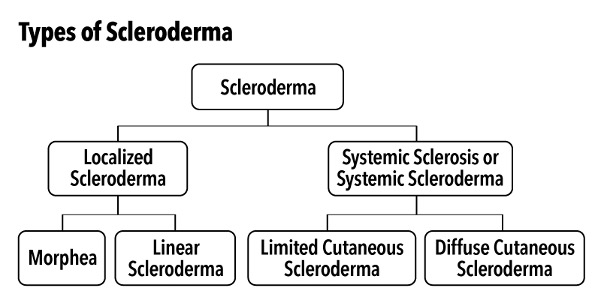
Localized Scleroderma
Localized scleroderma mostly affects the skin and the structures directly under the skin. It typically causes patches of thick, hard skin on the trunk, arms and legs, and face and the forehead area in one of two patterns:
- Morphea causes patches of skin to thicken into firm, oval-shaped areas. These areas may have a yellow, waxy appearance surrounded by a reddish or bruise-like edge. The patches may stay in one area or spread to other areas of skin. The disease usually becomes inactive over time, but darkened patches of skin may remain. Some people also develop fatigue.
- Linear scleroderma causes lines of thickened or differently colored skin to run down the arm, leg, and, rarely, on the forehead.
Systemic Scleroderma
Systemic scleroderma (also called systemic sclerosis) affects many systems in the body. This is the more serious type and can damage blood vessels and internal organs such as the heart, lungs, kidneys, and gastrointestinal tracts. It is further divided into “limited” and “diffuse” subtypes based on how much of the skin is involved.
Systemic scleroderma may come on quickly or gradually and may cause problems with internal organs in addition to the skin. Many people with this type have fatigue. Doctors usually divide systemic scleroderma into two types based on the degree of skin involvement:
- Limited cutaneous scleroderma comes on gradually and usually affects skin on the fingers, hands, face, lower arms, and legs below the knees. It often causes problems with blood vessels and the esophagus.
- Diffuse cutaneous scleroderma comes on relatively suddenly, usually with skin thickening on the fingers or toes. The skin thickening then spreads above the elbows and/or knees. This type can damage internal organs, including anywhere along the digestive system, the lungs, the kidneys, and the heart.
Symptoms Across Body Systems
Dental Problems
Scleroderma can make the mouth dry and damage connective tissues in the mouth, speeding up tooth decay and causing teeth to become loose. Tightening facial skin can also make the mouth opening smaller and narrower, which makes it harder to care for teeth.
Digestive Symptoms
Some types of scleroderma can affect parts of the digestive system, leading to symptoms such as heartburn, and constipation, and motility issues.
Lung Damage
Almost all people with systemic scleroderma have some loss of lung function. Some people develop severe lung disease, which comes in two forms:
- Pulmonary fibrosis: A hardening or scarring of lung tissue because of excess collagen
- Pulmonary hypertension: High blood pressure in the artery that carries blood from the heart to the lungs
Heart Problems
Some people may develop complications that cause heart problems, including:
- Cardiomyopathy: Scarring and weakening of the heart
- Myocarditis: Inflamed heart muscle
- Arrhythmia: Abnormal heartbeat
Kidney Problems
Renal crisis (sudden, severe hypertension and rapid kidney failure) is uncommon but can be serious for people with systemic scleroderma. Renal crisis happens when blood pressure levels rise suddenly to dangerous levels, which can quickly lead to kidney failure. Side effects of certain medicines, such as corticosteroids, can also trigger renal crisis.
Raynaud’s Phenomenon
Raynaud’s phenomenon is a condition that causes blood vessels in the extremities to narrow, restricting blood flow. Episodes or “attacks” usually affect the fingers and toes. There are two types of Raynaud’s phenomenon.
- Primary Raynaud’s phenomenon has no known cause. It is the more common form of the condition.
- Secondary Raynaud’s phenomenon is associated with another problem, such as rheumatic disease like lupus or scleroderma. Factors such as exposure to cold temperatures or certain chemicals may also be linked to this form. The secondary form is less common but typically more serious than the primary form due to damage that occurs to the blood vessels.
A typical Raynaud’s attack progresses as follows:
- The skin of the affected area turns pale or white due to lack of blood flow.
- The area then turns blue and feels cold and numb as the blood left in the tissue loses its oxygen.
- Finally, as the person warms up and circulation returns, the area turns red and may swell, tingle, burn, or throb.
People with severe Raynaud’s phenomenon can develop into digital ulcers with small, painful sores, especially at the tips of the fingers or toes. In rare cases, an extended episode of lack of oxygen to tissues can lead to gangrene — cellular death and decay of body tissues.
Causes and Risk Factors
The cause of scleroderma is unknown. However, researchers think that the immune system overreacts and causes injury the small blood vessels and the cells that line blood vessels. This triggers further inflammation and fibrosis. Connective tissue cells, especially a cell type called fibroblasts, to make too much collagen and other proteins to drive fibrosis. There can also be injuries to blood vessels.
Several factors may contribute to the disease:
- Genetic makeup: Genes can increase the chance for certain people to develop scleroderma and play a role in determining the type they have. The disease cannot be inherited directly, and it is not passed from parent to child like some genetic diseases. However, first-degree relatives of people with scleroderma are at higher risk of developing scleroderma than the general population.
- Environment: Researchers suspect that exposure to some environmental factors, such as certain chemicals, may trigger scleroderma.
- Immune system changes: Abnormal immune or inflammatory activity in the body triggers cell changes that cause the production of too much collagen. In some cases, an immune reaction to developing cancer cells may trigger scleroderma.
- Hormones: Women develop most types of scleroderma more often than men. Researchers suspect that hormonal or immunological differences between women and men might play a part in the disease.
Risk Factors
Anyone can get scleroderma; however, some groups have a higher risk:
- Sex: Scleroderma is more common in women than in men.
- Age: The disease usually appears between the ages of 30 and 50 and is more common in adults than children.
- Race: Scleroderma can affect people of all races and ethnic groups, but the disease can affect Black Americans more severely. For example:
- The disease is more common in Black Americans than in European Americans.
- Black Americans with scleroderma develop the disease earlier compared with other groups.
- Black Americans are more likely to have more skin involvement and lung disease compared with other groups.
Diagnosis
It can be difficult for doctors to diagnose scleroderma because symptoms vary from person to person and are similar to other diseases. There is no single test to diagnose the disease. Instead, doctors use a combination of approaches:
- Reviewing a person’s medical history
- Asking about current and past symptoms
- Performing a physical exam
Doctors may recommend additional testing, including:
- Laboratory tests to check for certain antibodies that mistakenly target and react to the body’s own tissues. Some antibodies may be common in people with scleroderma. However, a blood test alone does not diagnose scleroderma.
- Skin biopsy tests the skin by removing a small piece for further analysis.
To look for problems with internal organs, such as the heart, lungs, or kidneys, your doctor may order additional testing. Early diagnosis of organ involvement helps doctors treat and manage the disease. Testing may include:
- Computerized tomography (CT): Uses a scanner to take images of the lungs and other organs to look for pulmonary disease and does not make a specific diagnosis.
- Echocardiogram: Uses sound waves to create moving pictures of the heart.
- Pulmonary function tests: Measures the function of the lungs.
Early diagnosis of organ involvement helps doctors treat and manage the disease.
Treatment and Management
Treatment depends on the type of scleroderma a person has, their symptoms, and which tissues and organs are affected. Treatment can help control symptoms and limit damage.
Medicines
Doctors may recommend medicines, including:
- Anti-inflammatory medicines to manage pain and reduce swelling.
- Topical creams to treat skin changes, including tightness and itching.
- Immunosuppressants, which may suppress the overactive immune system and can help control some aspects of the disease. Doctors may prescribe oral, IV, or injectable immunosuppressants.
- Vasodilators to help blood vessels dilate (widen), which may treat Raynaud’s phenomenon and some lung issues.
Doctors may also prescribe medicines typically approved to treat other rheumatic diseases that have similar symptoms to scleroderma.
Physical and Occupational Therapy
Many people benefit from physical or occupational therapy to:
- Relieve pain.
- Improve muscle strength and mobility, including muscles in the arms, legs, and jaw.
- Learn techniques to help with activities of daily living.
Care for Symptoms in Different Body Systems
Dental Care
Tips to minimize dental problems:
- Brush and floss teeth regularly.
- Have regular dental checkups. Contact a dentist immediately if mouth sores, mouth pain, or loose teeth develop.
- Talk to a dentist and doctor about the best methods to keep the mouth moist.
- Use special mouthwashes or toothpastes for dry mouth.
Managing Digestive Symptoms
Doctors may prescribe heartburn, constipation, and motility medicines to help manage these symptoms. Helpful tips to manage digestive problems:
- Eat small, frequent meals.
- After meals, stay upright for 3 hours. Avoid reclining or slouching after eating.
- Eat moist, soft foods, and chew them well.
- Drink less alcohol and caffeine.
- Stay hydrated.
- When sleeping, raise the head of the bed with blocks or use a wedge pillow.
Lung Disease Treatment
Treatment differs for the two forms of severe lung disease:
- Pulmonary fibrosis may be treated with medicines that suppress the immune system, or medicines that can help counter fibrosis.
- Pulmonary hypertension may be treated with medicines that dilate blood vessels.
- Systemic sclerosis-associated interstitial lung disease (SSc-ILD) may be treated with medicines to slow lung function decline.
To help minimize lung complications, work closely with your doctor.
- Watch for signs of lung disease, including fatigue, shortness of breath, dry cough, or difficulty breathing, and swollen feet. Report these symptoms to your doctor.
- Follow up regularly with your doctor for evaluation of your lung function. This may include standard lung function tests, which measure your lung volumes to monitor the course of lung fibrosis. Checking for pulmonary hypertension early helps doctors manage and treat the condition, even before you may notice symptoms.
- Get regular flu and pneumonia vaccines as recommended by your doctor, especially if you are taking immune-suppressing medicines or have lung disease.
Heart Treatment
Treatments for heart complications can range from medicines to surgery and vary depending on the nature of the condition. Work with your doctor or healthcare provider to determine what is right for you.
Kidney Monitoring
It is important that you and your doctor work together to monitor your blood pressure, including:
- Check your blood pressure regularly and let your doctor know if you have any new or different symptoms such as a headache or shortness of breath. If your blood pressure is higher than usual, call your doctor right away.
- If you have kidney problems, remember to take your medicines as prescribed.
Medicines known as ACE (angiotensin-converting enzyme) inhibitors have made scleroderma-related kidney failure a less threatening problem than it used to be.
Living With Scleroderma
Depending on the type of scleroderma a person has and their symptoms, living with the disease may be hard. Taking an active part in treatment can help. The following tips may help:
- Keep warm. The body regulates its temperature through the skin. Dress in layers, wear gloves and socks, and avoid cold rooms and weather when possible.
- Avoid cold or wet environments that may trigger Raynaud’s phenomenon symptoms.
- If you smoke, quit. Nicotine and smoking cause blood vessels to contract, which can make some symptoms worse and cause lung problems.
- Apply sunscreen before going outdoors to protect against further damage from the sun’s rays.
- Use moisturizers on the skin to help lessen stiffness.
- Use humidifiers to moisten the air at home in colder winter climates. Clean humidifiers often stop bacteria from growing in the water.
- Avoid hot baths and showers, as hot water dries the skin.
- Avoid harsh soaps, household cleaners, and caustic chemicals. Wear rubber gloves if you use such products.
- Exercise regularly. Exercise, especially swimming, stimulates blood circulation to affected areas.
- Visit the dentist regularly for check-ups.
- Reach out to online and community support groups.
- Talk to family and friends to help them understand the disease.
- Talk to a mental health professional for help coping with a chronic illness.
Find Clinical Trials
Clinical trials uncover better ways to prevent, diagnose, treat, and understand diseases and conditions. To ensure results apply to everyone, volunteers of all ages, sexes, and backgrounds, including both healthy individuals and those with specific medical conditions, are needed. Find clinical trials on scleroderma.
Find Treatment
Most people will see a rheumatologist for scleroderma treatment. Rheumatologists specialize in rheumatic diseases such as arthritis and other inflammatory or autoimmune disorders.
Dermatologists, who specialize in conditions of the skin, hair, and nails, may also play an important role, particularly for people with localized scleroderma.
Because scleroderma can affect many different organs and organ systems, a person may have several different doctors providing care. These healthcare providers may include:
- Cardiologists specialize in treating diseases of the heart and blood vessels.
- Dental providers treat complications from the thickening of tissues of the mouth and face.
- Gastroenterologists treat digestive problems.
- Mental health professionals provide counseling and treat mental health disorders such as depression and anxiety.
- Nephrologists treat kidney disease.
- Occupational therapists teach how to safely perform activities of daily living.
- Orthopedists treat and perform surgery for bone and joint diseases or injuries.
- Physical therapists teach ways to build muscle strength.
- Primary care providers include physicians, nurse practitioners, and physician assistants.
- Pulmonologists treat lung disease and problems.
- Speech-language pathologists specialize in the treatment of speech, communication, and swallowing disorders.
Community Support
The following organizations provide information and support for people with scleroderma:
- National Scleroderma Foundation
- Scleroderma Research Foundation
- American College of Rheumatology
- American Academy of Dermatology
- Arthritis Foundation
- Genetics Home Reference
- Centers for Disease Control and Prevention, National Center for Health Statistics
Note: This resource list is for informational purposes only. It is not comprehensive, and an organization’s inclusion does not constitute an endorsement by NIH.
Research Information
The National Institutes of Health (NIH) is the largest public funder of biomedical research in the world. NIH invests most of its budget in medical research seeking to enhance life and to reduce illness and disability. NIH-funded research has led to breakthroughs and new treatments helping people live longer, healthier lives, and building the research foundation that drives discovery.
NIH is funding and conducting research to find better ways to treat symptoms, prevent organ damage, and improve the quality of life for people with scleroderma.
Areas of ongoing research include:
- Exploring the complex immune system to determine why the body creates antibodies against its own tissues. Identifying where and when the antibodies are created and how they function could lead researchers to find targets for new therapies.
- Unraveling the genetic factors that predispose a person to getting scleroderma and scleroderma-associated lung fibrosis.
- Understanding why scleroderma can affect Black Americans more severely.
- Evaluating how immunosuppressant and other medicines can be used to help manage the symptoms and complications of scleroderma, particularly pulmonary complications.
- Exploring the many factors that lead to fibrosis to see if their development can be blocked or reversed.
- Determining how substances known as cytokines contribute to the disease process.
Find NIH-funded research projects using NIH RePORTER, a searchable database of current and past research projects supported by NIH and other federal agencies.