 An official website of the United States government




Quality sleep, and getting enough of it at the right times, is as essential to survival as food and water.
Overview
Sleep is an important part of your daily routine. You spend about one-third of your life doing it. Like eating well and being physically active, getting a good night’s sleep is vital to your well-being.
Sleep was long considered just a block of time when your brain and body shut down. Thanks to sleep research studies done over the past decades, scientists now know that sleep has distinct stages that cycle throughout the night in predictable patterns. Sleep plays a housekeeping role that removes toxins in your brain that build up while you are awake.
Sleep affects almost every type of tissue and system in the body, from the brain, heart, and lungs to metabolism, immune function, mood, and disease risk. A chronic lack of sleep, or getting poor quality sleep, increases the risk of many types of health problems.
Chronic, long-term sleep disorders affect millions of Americans each year. They can interfere with work, driving, social activities, and overall quality of life.
How Sleep Works
Sleep is a period of rest that alternates with wakefulness. You have internal body clocks that control when you are awake and when your body is ready for sleep. These clocks have cycles of approximately 24 hours. The clocks are regulated by multiple factors, including light, darkness, and sleep schedules. Once asleep, you cycle through the stages of sleep throughout the night in a predictable pattern.
Sleep Stages
Once you drift off to sleep, your brain doesn’t just shut down; it moves through a predictable pattern of Non-REM and REM sleep. One full cycle takes about 80–100 minutes, and most people go through four to six cycles a night.
The balance of your sleep changes throughout the night. Early on, your body prioritizes deep sleep to help you recover physically. As morning approaches, those deep sleep windows get shorter while your REM cycles get longer.
Non-REM Sleep (The Recovery Phase)
This phase is all about physical restoration and is broken into three stages:
- Light Sleep (Stages 1 & 2): This is the transition from being awake to drifting off. Your heart rate slows, your temperature drops, and your body relaxes. You spend most of your night in Stage 2.
- Deep Sleep (Stage 3): This is the “recharging” stage that helps you feel refreshed in the morning. It happens in longer stretches during the first half of the night.
REM Sleep (The “Active” Phase)
Rapid Eye Movement (REM) sleep usually kicks in about 90 minutes after you fall asleep.
During this time, your brain is nearly as active as when you’re awake, this is where most vivid dreaming happens. To keep you safe, your brain temporarily paralyzes your arms and legs, so you don’t physically act out your dreams.
Dreaming
Everyone dreams. You spend about two hours each night dreaming but may not remember most of your dreams. Dreaming may help you process your emotions. Events from the day often invade your thoughts during sleep, and people suffering from stress or anxiety are more likely to have frightening dreams. Dreams are generally most vivid during REM sleep, but dreaming can also occur during non-REM sleep.
Sleep Regulation
Many factors play a role in preparing your body to fall asleep and wake up. Your body has several internal clocks, called circadian clocks. These typically follow a 24-hour repeating rhythm, called the circadian rhythm. This rhythm affects every cell, tissue, and organ in your body and how they work.
Your central circadian clock, located in your brain, tells you when it is time for sleep. Other circadian clocks are in organs throughout your body. Your body’s internal clocks are in sync with certain cues in the environment. Light, darkness, and other cues help determine when you feel awake and when you feel drowsy. Artificial light and caffeine can disrupt this process by giving your body false wakefulness cues.
Two main internal biological mechanisms, circadian rhythm and homeostasis, work together to regulate when you are awake and asleep.
Circadian rhythms direct a wide variety of functions, from daily changes in wakefulness to body temperature, metabolism, and the release of hormones. Your body’s biological clock, based on a 24-hour day, controls most circadian rhythms. Most people’s natural circadian cycle is slightly greater than 24 hours.
The light–dark cycle influences when your brain makes and releases melatonin. The amount of melatonin in your bloodstream starts to increase in the evening and peaks in the early morning. As you are exposed to more light, such as the sun rising, your body releases cortisol, which naturally prepares your body to wake up.
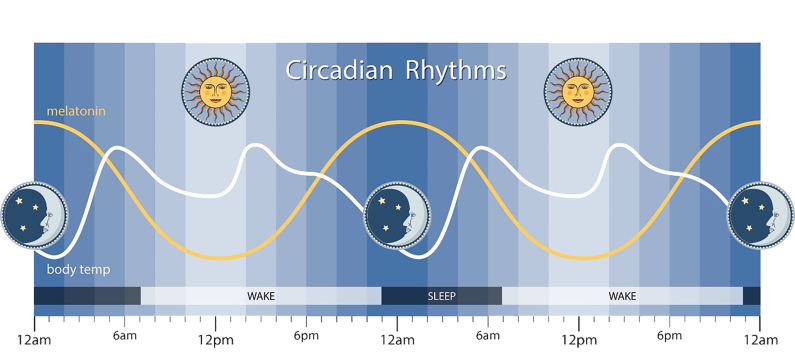
NIH/National Institute of Neurological Disorders and Stroke (NINDS)
Sleep-wake homeostasis keeps track of your need for sleep. This sleep drive gets stronger every hour you are awake and causes you to sleep longer and more deeply after a period without sleep.
A compound called adenosine is linked to this need for sleep. While you are awake, the level of adenosine in your brain continues to rise, signaling a shift toward sleep. Caffeine and certain drugs can interrupt this process by blocking the actions of adenosine.
How Much Sleep is Enough?
Sleep needs vary from person to person and change throughout the life cycle. The National Sleep Foundation’s recommendations are based on a review of more than 300 research studies.
| Age Group | Recommended Hours of Sleep Per Day |
| Newborns (0–3 months) | 14–17 hours, sleep patterns vary widely |
| Infants (4–11 months) | 12–15 hours per 24 hours (including naps) |
| Toddlers (1–2 years) | 11–14 hours per 24 hours (including naps) |
| Preschoolers (3–5 years) | 10–13 hours per 24 hours (including naps) |
| School age (6–12 years) | 9–12 hours per 24 hours |
| Teens (13–18 years) | 8–10 hours per 24 hours |
| Adults (18–60 years) | 7 or more hours per night |
| Adults (61–64 years) | 7–9 hours per night |
| Adults 65 years and older | 7–8 hours per night |
Most people’s natural circadian cycle is slightly greater than 24 hours. Some people naturally wake up early and some naturally stay up late. For example, it is natural for many teens to prefer later bedtimes and to sleep later in the morning than adults.
How much sleep children should get depends on their age. Sleep experts consider naps to be appropriate for children under age 7. Talk to your doctor or your child’s doctor if you think you or your child is sleeping too much or too little.
Experts recommend that adults sleep between 7 and 9 hours a night. Adults who sleep less than 7 hours a night may have more health issues than those who sleep 7 or more hours a night. Sleeping more than 9 hours a night is not necessarily harmful and may be helpful for young adults, people who are recovering from sleep deprivation, and people who are sick.
Some people believe that adults need less sleep as they get older, but there is no evidence to show that older people can get by with less sleep than younger people. The rhythm and timing of the body clocks also decline with age. Neurons, or cells, in the brain that promote sleep are lost as part of normal aging. Certain conditions such as Alzheimer’s disease can also speed the loss of neurons. This makes it harder for older adults to stay asleep. Other factors, such as less physical activity or less time spent outdoors, also affect circadian rhythms. Older people may have more trouble getting enough sleep and are more likely to take medicines that interfere with sleep.
How to Improve Sleep Quality
Good sleep can help protect your mental and physical health, quality of life, and safety. Key sleep factors crucial to protect your health:
- Good quality, uninterrupted sleep
- A regular bedtime and wake-up time every day
- Enough sleep each night
- Exposure to sunlight during the day.
Tips to Improve Sleep
- Stick to a sleep schedule. Go to bed and wake up at the same time each day—even on the weekends.
- Exercise regularly, but not too late in the day. Exercise for at least 30 minutes most days of the week, but not within a few hours of bedtime.
- Avoid caffeine and nicotine. The stimulating effects of caffeine in coffee, colas, certain teas, and chocolate can take 8 hours or more to wear off fully.
- Avoid alcohol before bed. Alcohol keeps you in the lighter stages of sleep, and you tend to wake up in the middle of the night when the sedating effects have worn off.
- Avoid large meals and beverages late at night. A large meal can cause indigestion that interferes with sleep. Drinking too many fluids at night can cause you to awaken frequently to urinate.
- Do not take naps after 3pm. Avoid napping in the late afternoon or evening. Keep naps to under an hour.
- Relax before bed. A relaxing activity, such as reading or listening to music, should be part of your bedtime ritual.
- Take a hot bath before bed. The drop in body temperature after the bath may help you feel sleepy, and the bath can help you relax.
- Create a good sleeping environment. Keep the bedroom quiet, cool, and dark. Avoid noises, bright lights, an uncomfortable bed, or a TV or computer in the bedroom.
- Don’t lie in bed awake. If you find yourself still awake after staying in bed for more than 20 minutes, get up and do some relaxing activity until you feel sleepy.
- Avoid screens before bed. Try not to look at your computer, phone, or TV an hour or so before bed. The light from these devices makes your brain think it’s time to be awake. Using “night mode” or wearing blue-light-blocking glasses may help to reduce the negative impact of these devices.
- Have the right sunlight exposure. Daylight is key to regulating daily sleep patterns. Try to get outside in natural sunlight for at least 30 minutes each day.
- See a doctor if you continue to have trouble sleeping.
A note on “catching up” on sleep: Many people feel they can “catch up” on missed sleep during the weekend, but depending on how sleep-deprived they are, sleeping longer on the weekends may not be enough to replace the sleep they’ve missed.
Important Notes on Complementary Approaches for Sleep
Be cautious about using any sleep product, prescription medicines, over-the-counter medicines, dietary supplements, or homeopathic remedies. Find out about potential side effects and any risks from long-term use or combining products. “Natural” does not always mean safe. Here are warnings about specific products:
- Kava: There are serious safety concerns about kava products, which have been linked to severe liver damage.
- Melatonin: The dosage of melatonin may differ from the amount indicated on the label since this product is not regulated by the U.S. Food and Drug Administration (FDA). Melatonin use might also place children and teenagers at risk for accidental or intentional overdose.
Signs of Poor Sleep Quality and Sleep Disorders
Signs of poor sleep quality include not feeling rested even after getting enough sleep, repeatedly waking up during the night, and experiencing symptoms of sleep disorders such as snoring or gasping for air. If you wake up tired, feel easily annoyed, have trouble falling asleep, or have trouble staying asleep, these may be signs you’re not getting a good night’s sleep. Signs of a sleep disorder:
Many do not regularly get the recommended amount of uninterrupted sleep they need to protect their health. Although sleep disorders can significantly affect your health, safety, and well-being, they can be treated with devices, therapies, medicines, and procedures.
Talk to a healthcare provider if you have any of these signs of a sleep disorder:
- You consistently take more than 30 minutes each night to fall asleep.
- You consistently wake up several times each night and then have trouble falling back to sleep, or you awaken too early in the morning.
- You often feel sleepy during the day, take frequent naps, or fall asleep at inappropriate times during the day.
- Your bed partner says that when you sleep, you snore loudly, snort, gasp, make choking sounds, or stop breathing for short periods.
- You have creeping, tingling, or crawling feelings in your legs or arms that are relieved by moving or massaging them, especially in the evening and when trying to fall asleep.
- Your bed partner notices that your legs or arms jerk often during sleep.
- You have vivid, dreamlike experiences while falling asleep or dozing.
- You have episodes of sudden muscle weakness when you are angry or fearful, or when you laugh.
- You feel as though you cannot move when you first wake up.
Keep in mind that children can have some of these same signs when they have a sleep disorder, but they often do not show signs of excessive daytime sleepiness. Instead, they may seem overactive and have difficulty focusing or doing their best in school.
Related Health Effects of Poor Sleep
Sleep plays a vital role in good health and well-being throughout your life. The way you feel while you are awake depends in part on what happens while you are sleeping. During sleep, your body is working to support healthy brain function and maintain your physical health. Not getting enough sleep can cause harm to your body. Research shows that over time it can affect your health and wellness including the following ways.
Performance
Cutting back on sleep by even one hour can make it tough to focus the next day and can slow your response time. Studies find that when you lack sleep, you are more likely to make bad decisions and take more risks. This can result in lower performance on the job or in school and a greater risk for a car crash.
Thinking and Memory
Sleep helps with learning and the formation of long-term memories. Not getting enough sleep or enough high-quality sleep can lead to problems focusing on tasks and thinking clearly.
Mood
Insufficient sleep can make you irritable and is linked to poor behavior and trouble with relationships, especially among children and teens. People who chronically lack sleep are at greater risk of developing depression.
Heart and Circulatory System
When you fall asleep and enter non-REM sleep, your blood pressure and heart rate fall. People who do not sleep enough or wake up often during the night may have a higher risk of coronary heart disease, high blood pressure, obesity, and stroke.
During sleep, your parasympathetic system controls your body, and your heart does not work as hard as it does when you are awake. During REM sleep and when waking, your sympathetic system is activated, increasing your heart rate and blood pressure to the usual levels when you are awake and relaxed. A sharp increase in blood pressure and heart rate upon waking has been linked to angina, or chest pain, and heart attacks.
Metabolism
The way your body handles fat varies according to various circadian clocks, including those in the liver, fat, and muscle. For example, the circadian clocks make sure that your liver is prepared to help digest fats at appropriate times. Studies have shown that not getting enough quality sleep can lead to higher levels of the hormones that control hunger, decreased ability to respond to insulin, increased consumption of food (especially fatty, sweet, and salty foods), decreased physical activity, and metabolic syndrome. All of these contribute to overweight and obesity.
Immune System
Sleep affects different parts of your immune system, which become more active at different times of day. People who do not sleep enough may be more likely to get colds and other infections.
Respiratory System
During sleep, you breathe less often and less deeply and take in less oxygen. These changes can cause problems in people who have health problems such as asthma or chronic obstructive pulmonary disease (COPD). Asthma symptoms are usually worse during early morning sleep. Likewise, breathing problems in people who have lung diseases such as COPD can become worse during sleep.
Hormones
Deep sleep triggers more release of hormones that fuel growth in children and boost muscle mass and the repair of cells and tissues in children and adults. Hormones released during sleep also control the body’s use of energy, which may explain why lack of sleep contributes to obesity and diabetes.
Your body makes different hormones at different times of day. This may be related to your sleep pattern or your circadian clocks. In the morning, your body releases hormones that promote alertness, such as cortisol, which helps you wake up. Other hormones have 24-hour patterns that vary throughout your life; for example, in children, the hormones that tell the glands to release testosterone, estrogen, and progesterone are made in pulses at night, and the pulses get bigger as puberty approaches.
Life Expectancy
Having a poor sleep pattern in terms of sleep duration, difficulty falling and staying asleep, waking up feeling unrested, and using sleep medicine has been associated with a decreased life expectancy.
Growth and Development
In children and teens, sleep also helps support growth and development. Getting inadequate sleep over time can raise your risk for chronic health problems. It can also affect how well you think, react, work, learn, and get along with others.
Risk Factors for Poor Sleep
In addition to not following tips for improved sleep, several factors can negatively impact sleep quality:
- Genetics: Genes may play a significant role in how much sleep we need, increase risk for sleep disorders, and impact our daily rhythms.
- Older age: The rhythm and timing of the body clocks decline with age. Older adults tend to go to bed earlier and wake up earlier than younger adults, and sleep tends to be shorter and lighter.
- Medicines: Certain commonly prescribed heart, blood pressure, or asthma medicines, as well as some over the counter and herbal remedies for coughs, colds, or allergies, can disrupt sleep patterns.
Prevention of Poor Sleep and Harms Related to Poor Sleep
Tips for Irregular Schedules
Some people have schedules that conflict with their internal body clocks or situations that make it difficult to get good sleep. This can affect how they feel mentally and physically. There are ways to cope.
Night shift workers are more likely to have conditions such as heart disease, digestive troubles, and infertility, as well as emotional problems. All these problems may be related, at least in part, to their chronic lack of sleep. To alleviate symptoms, workers can:
- Use bright lights at work.
- Talk to your employer about limiting shift changes as much as possible.
- Limit caffeine to the first part of your shift.
- If you need to sleep during the day, use light-blocking curtains.
If you’re still not able to fall asleep during the day or have problems adapting to a shift-work schedule, talk with your doctor about other options to help you sleep.
Tips for Jet Lag
Jet lag can lead to daytime sleepiness, trouble falling asleep or staying asleep at night, poor concentration, and irritability.
If you’re moving across time zones, you might want to begin adapting to the new time zone a few days before leaving. Or, if you are traveling for just a few days, you might want to stick with your original sleep schedule and not try to adjust to the new time zone. By using appropriately timed cues, most people can reset their biological clock, but only by 1–2 hours per day at best.
Prevention of Drowsy Driving
Stay safe by knowing the warning signs that you might be too sleepy to drive safely:
- Trouble keeping your eyes open or focused
- Continual yawning
- Inability to recall driving the past few miles
- Slow reaction times
Tips for drowsy driving prevention:
- Be well rested before hitting the road.
- Avoid driving between midnight and 7 a.m., when we are naturally the least alert and most sleepy.
- Don’t drive alone; a companion who can keep you engaged in conversation might help you stay awake.
- Schedule frequent breaks on long road trips.
- Don’t drink alcohol.
- Don’t count on caffeine to overcome extreme sleepiness.
Nighttime Safety for People with Neurological Disorders
Sleep disturbances are common among people with age-related neurological disorders such as Alzheimer’s disease and Parkinson’s disease. Poor sleep quality can make dementia symptoms worse. This affects the sleep of both the person with dementia and their caregiver. It is important to take steps that help improve sleep and nighttime safety.
There are several things to keep in mind to help you stay safe when you’re asleep:
- Install smoke alarms on each floor of your home.
- Lock all windows and doors that lead outside.
- Keep a telephone with emergency numbers by your bed.
- Have a lamp that’s easy to reach and turn on, a nightlight in the hallway or bathroom, and a flashlight nearby.
- Do not smoke, especially in bed.
- Remove items such as area rugs and cords that you could trip over if you wake up during the night.
Diagnosing Sleep Disorders
Talk to a doctor if you are not sleeping well. Doctors can diagnose some sleep disorders by asking questions about sleep schedules and habits and by getting information from sleep partners or parents. To diagnose other sleep disorders, doctors also use the results from sleep studies and other medical tests.
Some people have specific sleep disorders, which include:
- Sleep apnea: Pauses in your breathing during sleep
- Insomnia: Difficulty sleeping
- Restless leg syndrome: An urge to move the leg
- Narcolepsy: Extreme daytime sleepiness
- REM sleep behavior disorder
Sleep Diary
It might help to keep a sleep diary for a couple of weeks. Track when you go to bed, when you wake up during the night, and when you wake up for the day. Note whether you had caffeine or alcohol and whether you exercised that day. The sleep diary will help you identify patterns to discuss with your doctor and help with diagnosis.
Sleep Studies
Sleep studies, also called polysomnography, are painless tests that measure how well you sleep and how your body responds to sleep problems. They are also used to help your doctor diagnose sleep disorders.
The most common type of sleep studies records brain waves and monitor your heart rate, breathing, and the oxygen level in your blood during a full night of sleep.
Other Ways to Study Your Sleep
- Multiple sleep latency tests measure how quickly you fall asleep during a series of daytime naps and use sensors to record your brain activity and eye movements.
- A daytime maintenance of wakefulness test measures your ability to stay awake and alert.
- Activity monitors help doctors see how much you sleep and how well you sleep. They are worn at home for several days or sometimes weeks.
Sleep tests can help your doctor diagnose sleep-related breathing disorders such as sleep apnea, sleep-related seizure disorders, sleep-related movement disorders, and sleep disorders that cause extreme daytime tiredness such as narcolepsy. Doctors also may use sleep tests to help diagnose or rule out restless legs syndrome.
Your doctor will determine whether you need your sleep test at a sleep center or if you can do it at home with a portable device. Sleep tests at a sleep center usually last overnight. Removable sensors will be placed on your scalp, face, eyelids, chest, limbs, and finger. These sensors record your brain waves, heart rate, breathing effort and rate, oxygen levels, and muscle movements before, during, and after sleep. There is a small risk of irritation from the sensors, but this will go away after they are removed.
Sleep-Related Technologies
Additionally, millions of people are using smartphone apps, bedside monitors, and wearable items, including bracelets, smart watches, and headbands, to informally collect and analyze data about their sleep. Smart technology can record sounds and movement during sleep, track hours slept and monitor heartbeat and breathing. Other apps and devices make white noise, reduce light to stimulate melatonin production, and use gentle vibrations to help people sleep and wake.
Find Clinical Trials
Clinical trials uncover better ways to prevent, diagnose, treat, and understand diseases and conditions. To ensure results apply to everyone, volunteers of all ages, sexes, and backgrounds, including both healthy individuals and those with specific medical conditions, are needed. Find clinical trials on sleep.
Community Support
- American Sleep Apnea Association
- National Sleep Foundation
- Restless Legs Syndrome Foundation
- Project Sleep
Note: This resource list is for informational purposes only. It is not comprehensive, and an organization’s inclusion does not constitute an endorsement by NIH.
Research Information
The National Institutes of Health (NIH) is the largest public funder of biomedical research in the world. NIH invests most of its budget in medical research seeking to enhance life and to reduce illness and disability. NIH-funded research has led to breakthroughs and new treatments helping people live longer, healthier lives, and building the research foundation that drives discovery.
NIH supports research aimed at learning more about healthy sleep and sleep disorders.
Many mysteries remain about the association between sleep and health problems. For example, whether the lack of sleep leads to certain disorders, or whether certain diseases cause a lack of sleep.
Scientists have identified several genes involved with sleep and sleep disorders, including “clock” genes that influence our circadian rhythms and the timing of sleep. Several genetic models, including the worm, fruit fly, and zebrafish, are helping scientists identify molecular mechanisms and genetic variants involved in normal sleep and sleep disorders.
Find NIH-funded research projects using NIH RePORTER, a searchable database of current and past research projects supported by NIH and other federal agencies.